Metallic epoxy is the floor people stop and photograph: a glossy, marbled surface with real depth, like polished stone or a pour of molten metal frozen mid-swirl. It is the showpiece end of resin flooring, and it raises the same handful of questions every time we quote one. What actually is it? What are the downsides? How long does it last, and how is it different from a normal epoxy floor? Here is the honest answer to all of it.
What metallic epoxy flooring actually is
It helps to clear up the biggest misconception first. Metallic epoxy is not a special, separate type of resin with its own durability rules. It is a decorative metallic resin floor made by mixing a fine metallic or mica pigment into a clear epoxy resin, pouring it, and then manipulating it while it is still liquid. The pigment moves and separates as the resin levels and cures, and that movement is what creates the marbled, cloudy, three-dimensional effect. The structural floor underneath is ordinary, high-quality epoxy doing an ordinary epoxy job.
Because the effect is created by hand in a wet pour, every metallic floor is genuinely one-off. You choose the colours and the broad style, but the exact pattern emerges on the day. That uniqueness is the appeal, and, as we will come to, it is also behind one of the few real drawbacks.
The quick pros and cons (scan this first)
| The upside | The trade-off | |
|---|---|---|
| Looks | Deep, marbled, genuinely unique | Pattern cannot be specified to the millimetre |
| Surface | Seamless, no joints or grout | Shows dust and footprints on a high gloss |
| Durability | Hard-wearing like any epoxy | Only as good as the slab prep beneath it |
| Cleaning | Wipes clean, no grout lines | Marks show more on dark, glossy colours |
| Grip | Smooth and comfortable underfoot | Slippery when wet unless finished for grip |
| Sunlight | Fine indoors, out of direct sun | Standard epoxy can yellow under UV |
| Cost | High-end look for a floor | Dearer than a plain solid colour |
That table settles it for most people. The rest of this guide explains the why behind each row, so you know exactly what you are getting before the floor goes down.
How the marbled effect is made
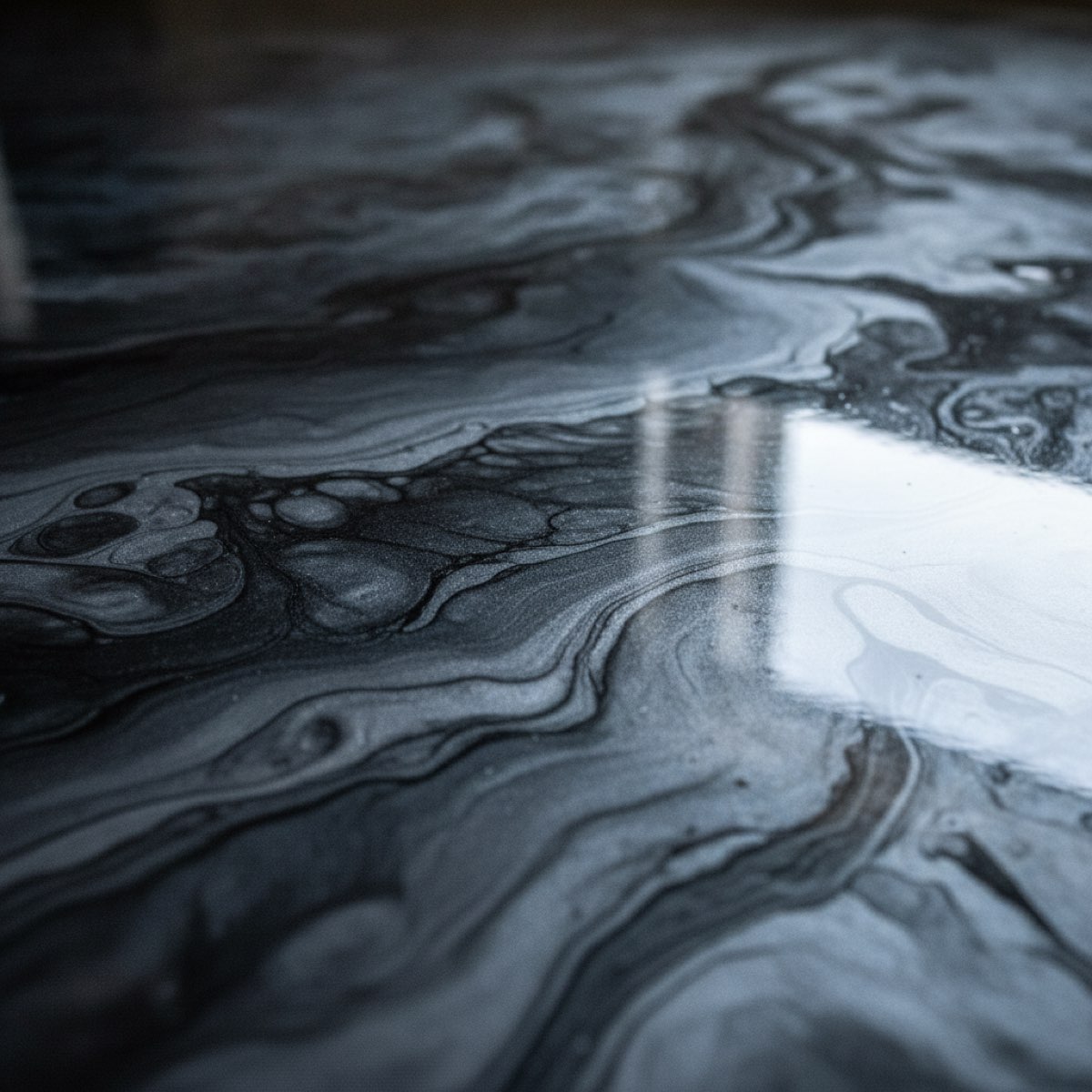
A metallic floor is built in layers. After the slab is ground back and primed, a base coat goes down, usually a solid colour that sets the tone of the finished floor. The metallic coat is then poured over it, and this is where the craft is. The installer works the wet resin, using rollers, trowels, a heat gun or solvent to push, blend and separate the pigment into the cells, veins and clouds that give the floor its movement. Get it right and it looks like marble or liquid metal; rush it and it looks flat and patchy.
Finally a clear topcoat seals everything in, locks down the effect and provides the wearing surface you actually walk on. This is the layer that does the protecting, and choosing the right one matters, which is exactly where sunlight and grip come in. The full stage-by-stage process is covered in our guide to how a resin floor is installed.
Metallic epoxy vs standard epoxy and flake
People often ask what the difference is between metallic epoxy and a "normal" epoxy floor. The honest answer is that they are the same family of material finished differently. A solid-colour floor is one even shade. A flake floor broadcasts decorative chips into the resin for a speckled, hard-wearing, grippy surface. Metallic uses pigment movement for depth and shine. All three are epoxy builds over the same prepared slab; what changes is the look and, with it, the grip and the upkeep.
The practical difference
The disadvantages, honestly
Metallic floors are sold hard on their looks, so here are the downsides laid out plainly. None of them are reasons to avoid one; they are things to design around.
It can be slippery when wet
A smooth, glossy metallic surface offers little grip once water, oil or snow-melt is on it. Indoors and dry it is fine, but for a garage where you bring a wet car in, or anywhere prone to spills, the answer is to build grip into the topcoat or add a fine anti-slip finish. It slightly softens the mirror shine, but it makes the floor safe, and it is far better decided before laying than regretted after.
It shows the everyday
A high-gloss floor, especially in a dark colour, shows dust, footprints and tyre marks that a matt or flake floor would hide. It cleans off in seconds with a mop, but if you want a floor that looks pristine with zero effort, a lighter colour or a flake finish is more forgiving.
Every floor is unique, which cuts both ways
The one-off pattern is the whole point, but it also means you cannot specify the exact swirl in advance, and a damaged area cannot be patched to match invisibly later. A skilled installer can blend a repair well, but an identical reproduction is not possible. It is the nature of a hand-worked floor.
Sunlight and yellowing
Like all standard epoxy, the resin can amber under strong UV. In a normal indoor space you will never see it, but in a sunlit showroom, a glazed extension or near big south-facing doors it matters, most visibly under pale colours. The fix is a UV-stable topcoat such as a polyaspartic seal, which holds the colour. We cover the whole issue in does epoxy resin flooring go yellow.
It costs more
A metallic floor takes more material, more skill and more time on site than a plain colour, so it sits at the higher end of resin pricing. You are paying for a feature finish. What drives the figure up or down is the same as any floor, covered in our guide to what resin flooring costs.
Thinking about a metallic floor?
Tell us about the space and how it gets used, grip included, and we will quote the whole job as one fixed price in writing.
How long does a metallic epoxy floor last?
A properly laid metallic epoxy floor lasts for many years of normal use, comfortably on a par with any other quality resin floor. Crucially, the metallic effect itself does not wear out, it is sealed under the clear topcoat, so what ages is the topcoat, not the look. Refresh the topcoat years down the line and the floor comes back to life without redoing the whole thing.
As with every resin floor, lifespan is decided far more by what happens before the resin goes down than by the resin itself. A metallic floor poured onto a dusty, unground or damp slab will fail early no matter how beautiful it looks on day one. Laid on honestly prepared concrete, it will outlast almost anything else you could put on the floor.
Where metallic epoxy works best
It earns its keep where looks matter and the floor stays mostly dry: showrooms and retail spaces, home gyms, salons, offices, feature rooms, and the domestic garage that doubles as a space to show off a car. It is the obvious choice for a showroom floor where the surface is part of the sell.
It is a weaker fit where grip and forgiveness beat drama: a working trade garage, a wet workshop, or a commercial kitchen. There, a flake or anti-slip build usually serves better, and our guide to the best resin floor for a garage walks through the choice. If you are torn on the underlying system, epoxy vs polyaspartic covers the base-and-topcoat decision.
Keeping it looking right
Upkeep is genuinely easy: sweep or dust-mop the loose grit that scratches any gloss floor, and mop with a pH-neutral cleaner. Avoid harsh or abrasive products that dull the shine, and wipe spills before they sit. That is the whole routine, and it is the same one in our guide to cleaning and maintaining a resin floor.
The non-negotiable
About this guide
Who wrote this
This guide is written by the Obsidian Resin team: we prep and pour resin floors, metallic finishes included, for garages, showrooms, workshops and commercial units across Leicestershire and the East Midlands. The pros and cons here are the ones we talk customers through on real jobs, not a sales sheet.
Why we wrote it
Metallic floors are sold on a photo and rarely on the detail, so the slip, the sunlight and the one-off nature catch people out after the fact. This is the straight explanation we would give you about your own space before you commit.
Our honest position
We have a commercial interest in you choosing a professionally laid floor, and we are upfront about that. We will tell you plainly when a metallic finish is the right call and when a flake or anti-slip build would serve you better. The guide is meant to be useful whether you use us or not.
Frequently asked questions
- What are the disadvantages of metallic epoxy flooring?
- It can be slippery when wet unless finished for grip, it shows dust and footprints on a high gloss (especially dark colours), the unique pattern cannot be specified exactly or patched to match invisibly, standard epoxy can yellow in strong sunlight, and it costs more than a plain colour. All are manageable by designing the build for the space.
- How long does a metallic epoxy floor last?
- Many years of normal use, on a par with any quality resin floor. The metallic effect is sealed under the topcoat so it does not wear; the topcoat ages and can be refreshed. Lifespan is decided far more by slab preparation than by the finish.
- What is the difference between epoxy and metallic epoxy?
- They are the same material finished differently. Metallic epoxy is a standard epoxy build with a metallic pigment worked into a coat to create a marbled, three-dimensional look. The durability comes from the build and prep, which are the same; only the appearance and the upkeep differ.
- Is a metallic epoxy floor slippery?
- When dry it is fine; when wet a smooth gloss surface offers little grip. For garages or spill-prone areas we build grip into the topcoat or add an anti-slip finish, which keeps it safe with only a slight softening of the shine.
- Is metallic epoxy good for a garage?
- Yes for a clean, mostly dry garage where you want a standout floor, particularly one that shows off a car. For a wet, heavy-use working garage a flake or anti-slip build is usually more practical. We help you choose based on how the space is actually used.
- Can a metallic epoxy floor be repaired?
- A damaged area can be repaired and blended by a skilled installer, but because every floor is hand-worked and unique, an exact, invisible match is not possible. It is the trade-off that comes with a genuinely one-off finish.