It is one of the most repeated worries about resin floors, and it is half true. Epoxy does have a known relationship with sunlight, and ignored, it can leave a floor looking warmer and more yellow than the day it went down. But it is a specific, predictable effect with a straightforward fix, not a flaw that dooms every resin floor. Here is exactly what causes it, where it matters, and how a floor is specified so it never happens to yours.
Why epoxy can yellow
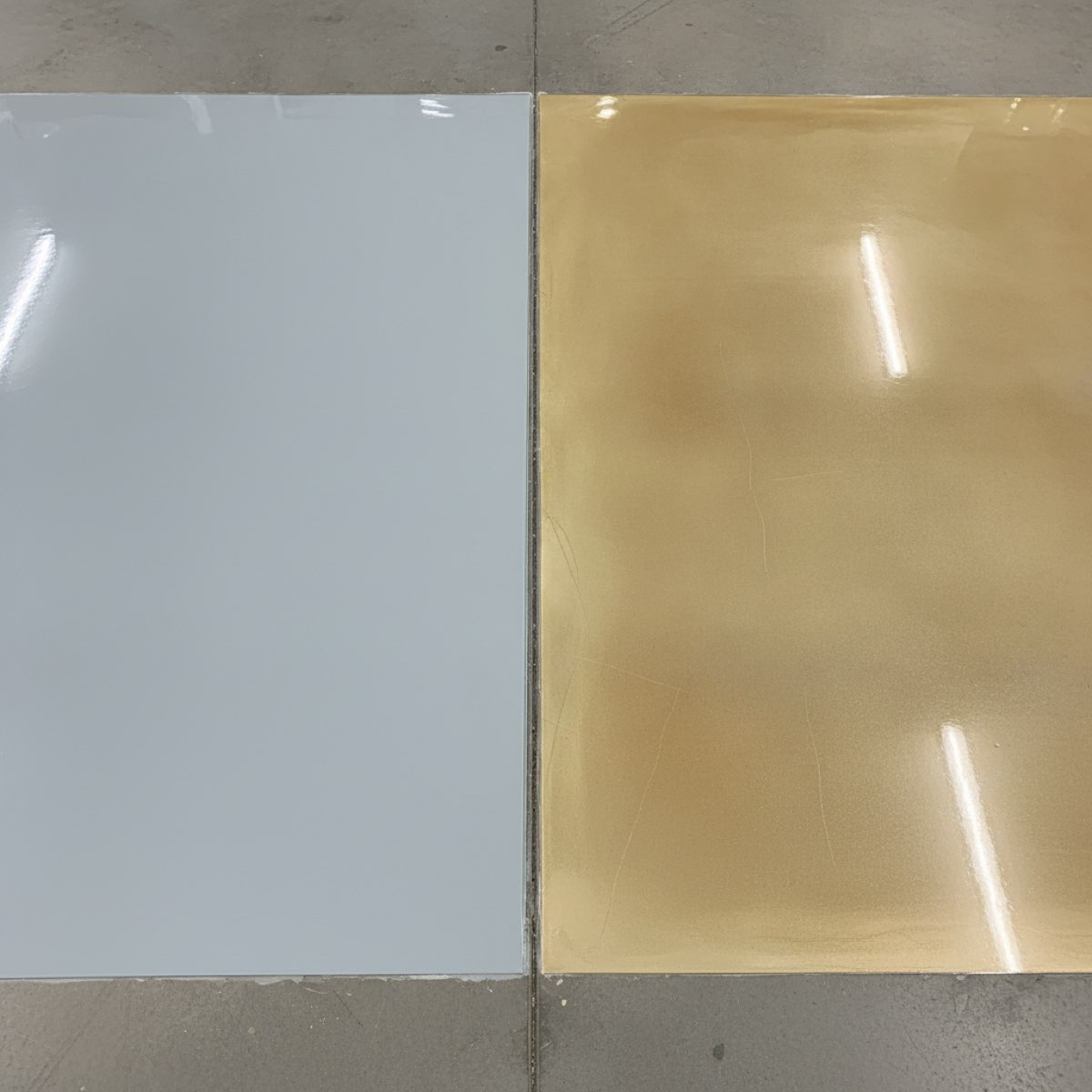
Standard epoxy resins are what chemists call aromatic, and aromatic resins are sensitive to ultraviolet light. Under sustained UV exposure the resin slowly oxidises, and that shows up as a gradual ambering, a warm, yellowish shift in the colour. It is purely a surface, cosmetic effect; the floor is every bit as hard and as bonded as it ever was. It simply looks warmer, and the change is most obvious under white, grey or pastel colours and least obvious under dark ones.
Where it actually matters (and where it never does)
The single thing that decides whether yellowing is a concern is how much sunlight the floor sees. That is it.
- A dark, enclosed garage with the door usually shut: no meaningful UV, no yellowing you would ever notice.
- A showroom with big glazed frontage, or a unit with south-facing roller doors open all day: real UV exposure, where bare epoxy could amber over the years.
- A patio or any outdoor surface: full UV, where UV stability is essential from the start.
The point most warnings miss
How a properly specified floor avoids it
The fix is a UV-stable topcoat. Where a floor will see sunlight, we seal it with an aliphatic, UV-stable coat, very often a polyaspartic, that is not affected by ultraviolet and holds its colour. This is exactly why so many good floors are built as an epoxy body with a polyaspartic topcoat: you get epoxy's depth, thickness and bond underneath, and colour stability on the surface that actually meets the light. We go into that trade-off in full in our epoxy vs polyaspartic guide.
It is worth knowing that the resin systems we lay are a world away from the cheap, single-pack coatings that yellow fastest. But the principle stands: the specification has to match the light, and getting that right is part of speccing the floor when we quote, not an upsell afterwards.
Floor in a sunny spot?
Tell us about the space and how much light it gets. We will spec a UV-stable build that holds its colour, and put it in a fixed-price written quote.
Does metallic or flake change anything?
The decorative finish sits under the same topcoat, so it is protected the same way. A metallic floor in a glazed showroom needs a UV-stable seal just as a solid colour does, and a flake floor actually hides any slight colour shift well thanks to its speckled, multi-tone surface. As ever, it is the topcoat and the light exposure that matter, not the finish underneath.
What about a floor that has already yellowed?
An existing epoxy floor that has ambered can usually be brought back without ripping it out. If the floor is otherwise sound, the surface is abraded and a fresh UV-stable topcoat applied over the top, which restores the look and protects it going forward. We assess whether that is the right route, or whether the floor is better recoated more fully, when we take a look.
About this guide
Who wrote this
This guide is written by the Obsidian Resin team. We lay both UV-sensitive and UV-stable systems across Leicestershire, in everything from pitch-dark garages to glazed showrooms, so the advice here is about matching the floor to the light, which is what we do on every quote.
Our honest position
We have a commercial interest in laying your floor and we are upfront about that. We have not pretended epoxy never yellows, because that would be untrue and you would find out the hard way. The honest position is that yellowing is predictable and avoidable with the right specification.
Frequently asked questions
- Does epoxy resin flooring go yellow?
- Standard epoxy can amber under sustained UV light, so an exposed floor in strong sunlight may yellow over time. In a dark indoor space it will not noticeably change.
- How do you stop a resin floor yellowing?
- With a UV-stable topcoat, often a polyaspartic, over the epoxy build. It is not affected by ultraviolet and holds its colour, so the floor stays true even in sunlight.
- Will my dark indoor garage floor yellow?
- No. Yellowing is caused by UV, and an enclosed garage gets effectively none. It is only a consideration for sunlit, glazed or outdoor floors.
- Does yellowing weaken the floor?
- No. It is a purely cosmetic, surface colour change. The floor remains just as hard, bonded and durable as before.
- Can an epoxy floor that has already yellowed be fixed?
- Usually, yes. If the floor is sound, the surface is abraded and a fresh UV-stable topcoat applied, which restores the colour and protects it from then on. We assess the best route when we look at it.