Most people planning a garage gym search for rubber mats or tiles first, and those have their place, but they only solve part of the problem. The floor underneath still matters, and getting the base right is what makes a garage gym clean, grippy and hard-wearing. Here is how to think about it, and where resin and rubber each earn their keep.
Start with the base, not the mats
A bare concrete garage slab is dusty, cold, absorbs spills and sweat, and is slippery when damp. Laying rubber straight over it traps that dust underneath and does nothing for the rest of the floor. A resin gym floor seals the slab into one continuous, wipe-clean surface: sweat and chalk mop straight off, there is no dust, and it grips underfoot. That is the foundation a good garage gym is built on.
Resin floor plus rubber where it counts
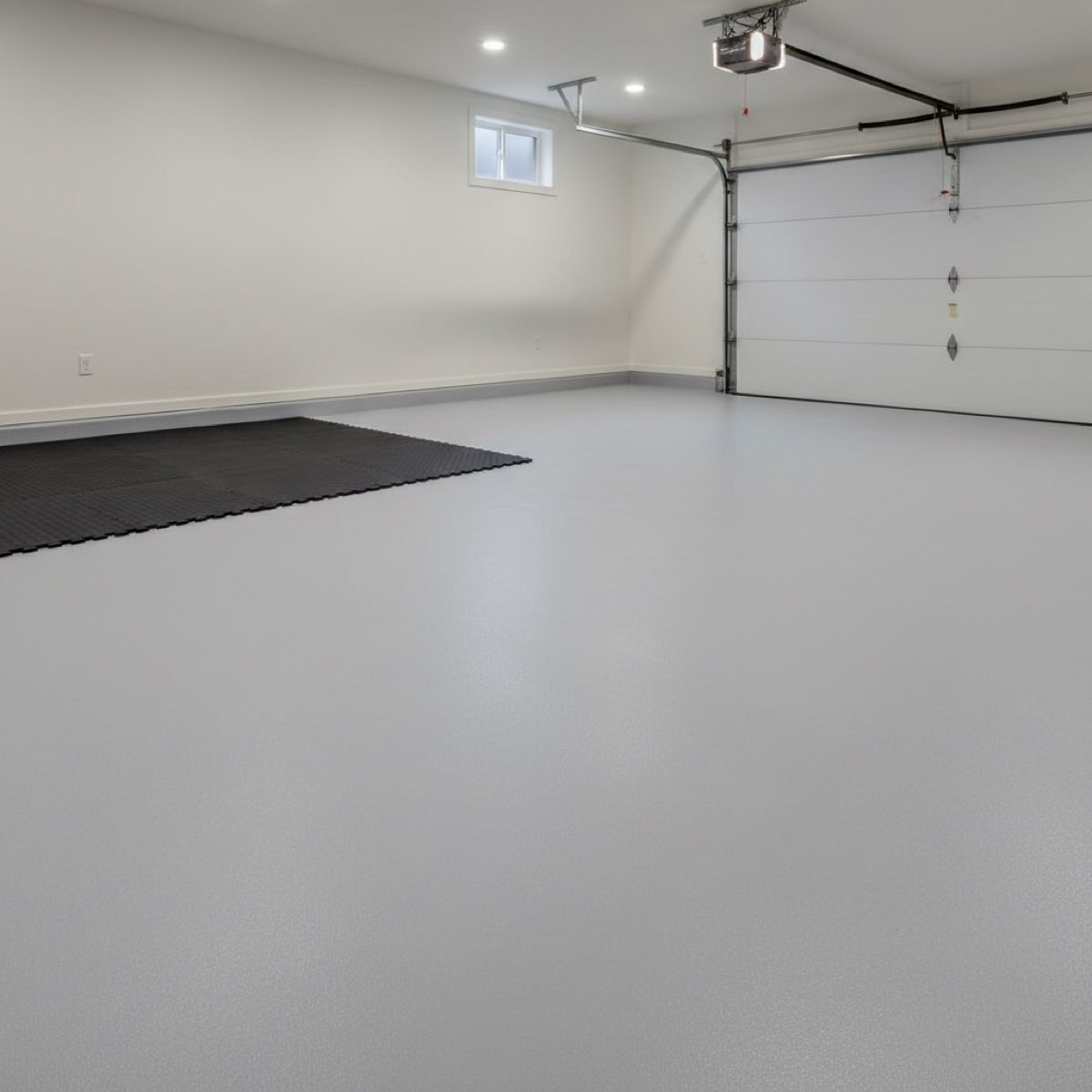
You do not have to choose one or the other, and the best setups use both. Resin across the whole floor for the clean, grippy, easy-care surface, then rubber matting or tiles in the drop zone, under the rack, the platform or wherever loaded bars land. The resin handles the day-to-day; the rubber takes the impact and protects both the floor and your kit. It is the combination, not either on its own, that works best.
| Option | Grip and cleaning | Dropped weights | The catch |
|---|---|---|---|
| Bare concrete | Dusty, cold, slippery when damp | Chips and cracks | No real gym floor at all |
| Rubber mats alone | Good underfoot, seams trap dirt | Handles drops well | Dust and damp stay trapped under it |
| Resin base (+ rubber in the drop zone) | Seamless, wipe-clean, grippy | Rubber where it lands protects it | Best of both, needs laying properly |
Do not lay rubber over dusty concrete
Kitting out a garage gym?
Tell us the size and how you train. We will spec a resin floor with grip and drop-zone protection to suit, in a fixed-price written quote.
Grip and drop-zone protection
- An anti-slip aggregate broadcast into the resin so it grips even when you are sweating, without feeling rough.
- Rubber in the drop zone, sized to the training: around 20mm interlocking tiles suit most garage gyms, and a common setup is a 15mm base through the room with a thicker 20mm-plus pad under the platform or rack.
- A hard-wearing finish under the rest of the kit so wheels, benches and racks do not mark it.
- Coving the resin up the wall a few inches so sweat and dust wipe out cleanly with no hard edge.
One honest limit: if you are dropping loaded Olympic bars from height, no mat alone fully saves the slab. The proper answer there is a built platform, layers of ply topped with rubber, in the lifting zone, sitting on the sealed resin floor. Rubber tiles handle everyday training; a platform handles serious deadlifts and cleans.
Which finish for a garage gym
A flake floor is the popular choice: the speckle hides chalk, marks and scuffs and gives natural grip. A solid colour works too if you prefer a cleaner look. Our garage floor ideas guide covers the finishes, and if the garage doubles as parking and gym, the garage floor page shows how one floor covers both.
About this guide
Who wrote this
This guide is written by the Obsidian Resin team. We lay resin gym floors across Leicestershire, plenty of them in garages that double as home gyms, so we plan the grip and the drop zones around how people actually train.
Our honest position
We lay resin, not rubber matting, and we will still tell you to use rubber in the drop zone because it is the right tool there. The resin is the base that makes the whole floor clean and grippy; the mats protect the spots that take a hammering. Both, in the right places.
Frequently asked questions
- What is the best flooring for a garage gym?
- A seamless resin floor as the base, with rubber matting in the drop zone. The resin seals the slab into a clean, dust-free, grippy surface that mops down; the rubber takes the impact where you drop loaded bars. The combination beats either bare concrete or loose mats alone.
- Can you put rubber gym mats over a resin floor?
- Yes, and it is the ideal setup. Resin across the whole floor for the clean, grippy surface, then rubber mats or tiles on top in the lifting and drop zone. The mats sit on a sound, sealed, dry surface rather than dusty concrete.
- Does a resin floor handle dropped weights?
- For general training, yes, it is far tougher than bare concrete. For heavy Olympic lifting where loaded bars are dropped, use rubber matting or a platform in that zone to take the impact and protect both the floor and your bar.
- Do I still need rubber mats if I have a resin floor?
- Only where you drop weights. Across most of the gym the resin floor is enough: grippy, wipe-clean and hard-wearing. Add rubber in the drop zone, under a platform or rack, where the impact lands.
- Is a resin gym floor slippery when you are sweating?
- It does not have to be. We broadcast a fine anti-slip aggregate into the topcoat so it grips under sweaty feet and dropped chalk without feeling rough, which matters more in a gym than anywhere.