Colour is the part of a resin floor everyone has an opinion on, and the part that is easiest to get slightly wrong. Almost any colour is possible, so the limiting factor is not the palette; it is how a colour behaves once it is on the floor, under your lights, taking your traffic. A shade that looks crisp on a phone screen can show every speck of dust in a north-facing garage, or throw glare across a sunlit showroom. This guide walks through how to choose a colour and finish that still looks right a year in, not just on the sample.
How each finish behaves (scan this first)
| Finish | How it reads | Hides dust & marks | Grip | Shows scratches |
|---|---|---|---|---|
| Solid colour, gloss | Mirror-like, deepens the colour, brightens a space | Poor | Low when wet | High |
| Solid colour, satin | True tone, soft sheen, the all-round pick | Moderate | Better | Medium |
| Solid colour, matt | Flat, no glare, reads quite industrial | Good | Best | Low |
| Metallic | Marbled, three-dimensional, premium and glossy | Moderate | Low unless gritted | High |
| Flake (chip) | Speckled, multi-tone, textured | Best | Good built in | Low |
| Quartz | Granular, terrazzo-like, hard-wearing | Good | Good built in | Low |
Read across that table and a pattern jumps out: the smoother and glossier the floor, the more premium it looks and the more it shows. The more texture it has, the more it forgives. Most of choosing a colour is really choosing where you want to sit on that trade-off.
The palette: you are not stuck with industrial grey
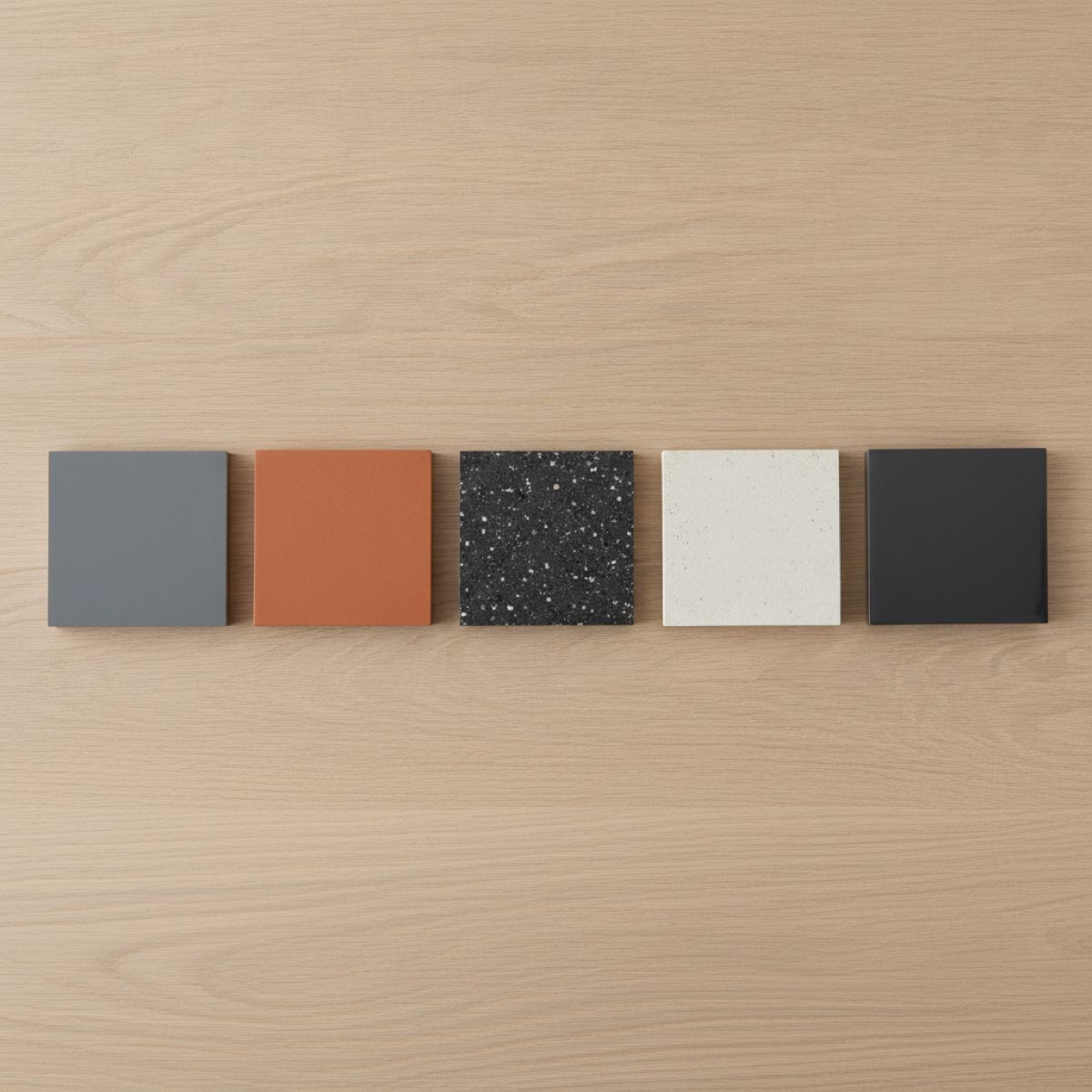
A solid-colour floor can be matched to almost any reference you bring, whether that is a RAL number, a British Standard colour or a paint shade off a tin. Greys and blues are the most asked-for, but there is no real restriction beyond the manufacturer's range. Decorative finishes work differently: rather than one flat colour, a flake floor is built from a pre-mixed blend of coloured chips, and a metallic is a pigment worked while wet, so each pour is unique. One thing always holds: a screen never shows the colour honestly, so judge it from a physical sample in the actual room, not a photo.
Why the finish changes the colour
The same grey can look like three different floors depending on the sheen. A high gloss deepens and intensifies the colour, bounces light around and makes a space feel larger and brighter, which is why showrooms love it. The cost is that gloss shows every footprint, dust mote and scratch, throws glare under bright lights, and is slippery when wet unless an anti-slip aggregate is added. A satin sits in the middle: enough sheen to lift the room, forgiving enough to live with, and the sensible default for most spaces. A matt finish kills glare and grips best, but reads flat and industrial. So before you fix on a colour, decide how much shine you actually want underfoot.
Decorative finishes: flake, metallic and quartz
If a single flat colour feels too plain, three decorative routes add depth and, usefully, hide marks:
- Flake scatters coloured vinyl chips through the coat. It is the best at disguising dust, tyre marks and small imperfections, and the texture adds grip. It is the usual pick for a working garage.
- Metallic gives a marbled, lit-from-within look that is genuinely high-end. It is smooth and glossy, so it shows scratches and needs an aggregate if it is anywhere that gets wet, and it is the most labour-intensive finish to lay.
- Quartz broadcasts coloured grains for a tough, granular, terrazzo-like surface with grip built in. It suits wet and high-traffic areas where a smooth floor would struggle.
How to choose for your space
Three things decide whether a colour works: light, use and what you are willing to clean.
- Light. A bright, glazed room can make gloss glare, so lean satin. A dark garage benefits from a lighter colour or a touch of gloss to bounce what light there is around, but accept it will show dirt sooner.
- Hiding marks. A mid-tone grey, ideally with a flake blend through it, hides dust and tyre marks best. White shows every speck and oil stain; very dark shows dust and scuffs. The extremes look great empty and demanding once used.
- Slip. If the floor ever gets wet, the finish matters more than the colour. (More on that below.)
The white-floor trap
Slip resistance comes from the finish, not the colour
Colour has nothing to do with how slippery a floor is; the finish does. A smooth gloss or metallic can be slick once it is wet, while flake, quartz or a broadcast anti-slip aggregate in the topcoat keeps grip without changing the look you chose. In the UK, slip is measured by the Pendulum Test Value (PTV), where 36 or above is rated a low slip risk. The takeaway is simple: choose the colour you love, then choose a finish or aggregate that keeps it safe wherever water, sweat or spills are likely.
Will the colour fade or yellow?
This is the one that catches people out. Standard epoxy is not UV-stable, so under sustained sunlight or daylight it can amber and shift, and pale colours and clears show it worst. The fix is a UV-stable topcoat (a polyurethane or polyaspartic) over the colour, which holds the tone and the gloss where the light hits. If your floor sits in a sunlit showroom, a conservatory-style space or a garage with the door open all day, this matters; in a dark, enclosed garage it barely does. We go into the why in our guide to whether epoxy resin yellows.
Not sure which colour and finish suits your space?
Tell us about the room, the light and how the floor gets used, and we will talk you through the options and quote one fixed price for the whole job, with no obligation.
Safe choices by setting
- Garage: a mid-grey solid colour or a grey-based flake in satin. Practical, hides marks, still looks finished. Our guide to the best resin floor for a garage covers the finish side in full.
- Showroom or retail: a high-gloss solid colour or a metallic showroom floor for drama and brightness, with a UV-stable topcoat where there is glazing.
- Kitchen or interior: a solid colour in satin, matched to the units and walls, for a clean seamless look.
About this guide
Who wrote this
This guide is written by the Obsidian Resin team. We spec and lay resin floors in solid colours, flake, metallic and quartz across Leicestershire and the East Midlands, so the advice here is what we tell customers when they are standing in the room with a sample in their hand, not colour theory from a brochure.
Why we wrote it
Colour is the choice people most often regret, almost always because they picked from a screen and did not think about light, use and upkeep. This is the honest version of the conversation we have on every quote.
Our honest position
We lay floors for a living, so yes, we would like you to choose us. But the colour advice here holds whoever lays your floor: pick the finish for the room, not the photo, and see a physical sample before you commit.
Frequently asked questions
- What colours can I have?
- Almost any. Solid colours are matched to a RAL or British Standard reference, or a shade you bring, and decorative options add flake blends, metallic and quartz on top of that. The limit is the manufacturer range, not your imagination.
- Gloss or satin for a garage?
- Satin for most garages. It cuts glare, hides dust and scratches better than gloss, and is less slippery. Gloss suits showrooms that want maximum brightness and are happy to keep on top of cleaning.
- Which colour hides dirt and tyre marks best?
- A mid-tone grey, ideally with a flake blend through it. Avoid white, which shows every speck and oil stain, and avoid very dark, which shows dust and scuffs.
- Will my floor fade or go yellow in the sun?
- Standard epoxy can amber under sustained UV, with pale colours showing it most. A UV-stable polyurethane or polyaspartic topcoat over the colour holds the tone where daylight reaches the floor.
- Does a darker or lighter colour change how slippery it is?
- No. Slip comes from the finish, not the colour. A smooth gloss is slick when wet whatever the shade; flake, quartz or an anti-slip aggregate adds grip without changing the look.
- Can I match the floor to an existing colour scheme?
- Yes. We can match a solid colour to a RAL or British Standard reference, or work to a sample you provide, so the floor sits with your walls, units or branding.