One of the quiet joys of a resin floor is how little it asks of you. Because the surface is seamless and non-porous, there are no joints to trap dirt and nothing for spills to soak into, so keeping it clean is closer to wiping a worktop than scrubbing a floor. It is the same reason resin works so well as a kitchen floor. Here is the whole maintenance routine, which is short, plus the few things worth not doing.
Everyday cleaning
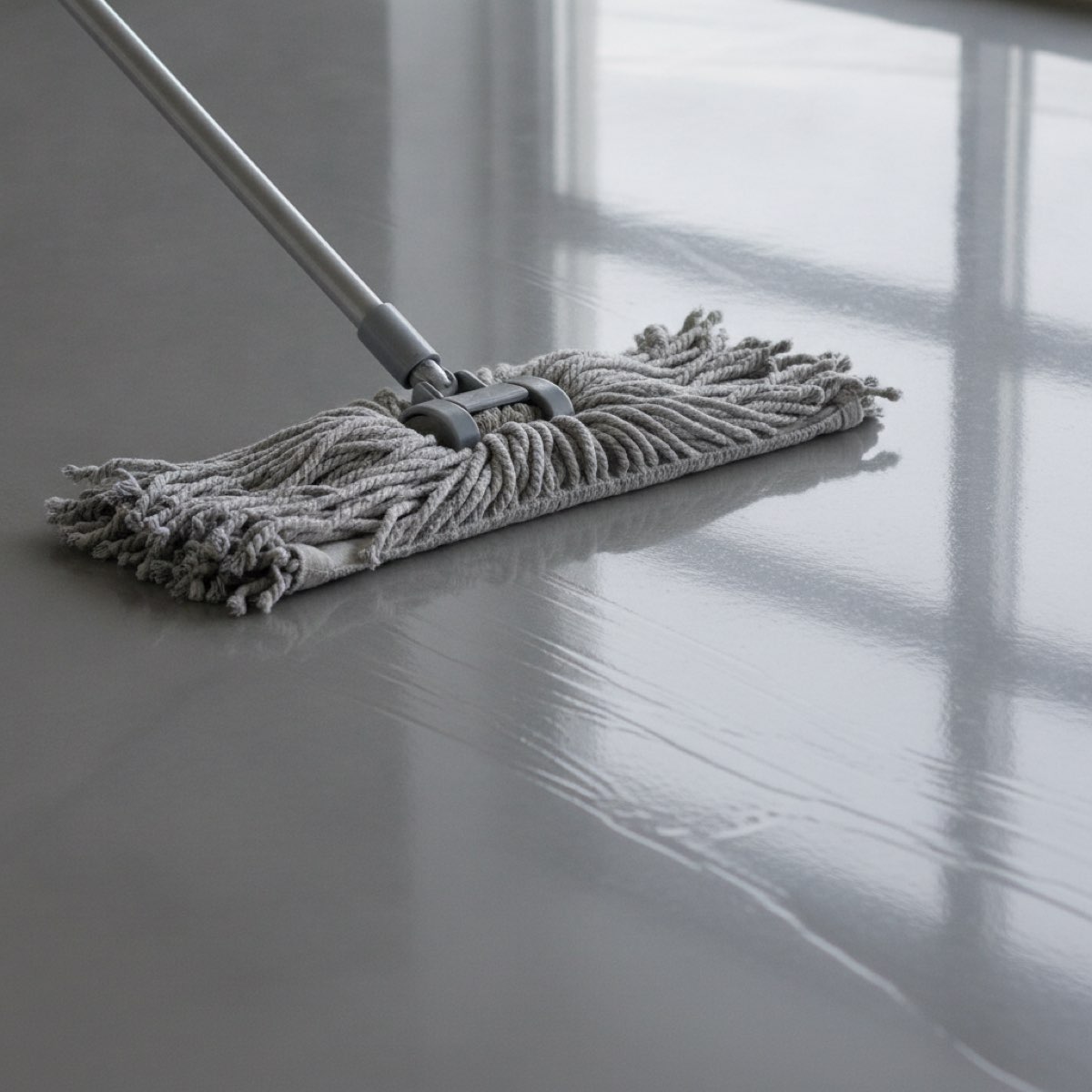
Day to day, two steps cover it:
- Sweep, dust-mop or vacuum to lift grit and dust. This is the one that actually protects the floor, because loose grit underfoot or under tyres is the main thing that dulls a finish over time.
- Mop with warm water and a small amount of pH-neutral floor cleaner. Wring the mop out well; the floor does not need flooding, just wiping.
How often depends on the floor. A domestic garage floor might want a sweep weekly and a mop now and then; a busy commercial floor may get both daily. Either way it is quick work, because nothing is ground into a porous surface.
Dealing with spills
The big advantage of a non-porous resin floor is that spills sit on top rather than soaking in, so you have time and they wipe up cleanly. Oil, brake fluid, paint, most chemicals: wipe them up when you notice them and the floor underneath is unmarked. There is no rush of the kind you get with bare concrete or a porous seal, where a spill stains the moment it lands. For a workshop floor, that alone changes how the day runs.
The one habit that matters most
What to keep off the floor
Resin is tough, but a handful of things shorten the life of the finish for no good reason:
- Harsh, highly acidic or alkaline cleaners and neat bleach. They are unnecessary on a non-porous floor and can dull the surface over time. Stick to pH-neutral.
- Abrasive scouring pads and wire wool, which scratch the sheen. A soft mop or a soft brush is all it needs.
- Letting grit build up, then dragging heavy kit across it. Sweep first, move things second.
- Dropping a hot tyre straight onto a brand-new floor before it has fully cured. Once cured, normal use is no problem.
Keeping grip on an anti-slip floor
If your floor has a textured anti-slip or quartz finish, that texture is doing a job, and dirt filling it is what reduces grip, not wear. A slightly stiffer brush and an occasional proper wash-down keep the texture clear and the grip where it should be. The surface itself does not need re-doing; it just needs the muck kept out of it.
Want a floor that is this easy to live with?
Let us know about the space and how it gets used, and we will spec a wipe-clean floor for it and quote one fixed price in writing.
Long-term care and re-coating
Beyond cleaning, a resin floor needs almost nothing for years. There is no sealing, waxing or polishing to keep up, unlike polished concrete or natural stone. Over a long life, or on a very heavily trafficked commercial floor, the clear topcoat is the part that eventually shows wear, and the good news is that it can be refreshed: the surface is abraded and a new topcoat applied, bringing the finish back without relaying the floor. It is the same approach used to put right an epoxy floor that has yellowed in the sun, and it is a fraction of the cost and disruption of a new floor.
How long should the finish last?
Cleaned simply and kept free of grit, a properly laid resin floor holds its finish for many years, and the floor itself lasts longer still. As with everything resin, the foundation of that longevity is the preparation underneath, which we cover in our guide to how a resin floor is installed. Maintenance keeps a good floor looking good; it cannot rescue one that was poured onto a poorly prepared slab.
About this guide
Who wrote this
This guide is written by the Obsidian Resin team. We lay floors for garages, workshops, showrooms and commercial units across Leicestershire and the East Midlands, and this is the same care advice we leave with every customer when we hand the floor over.
Our honest position
We have a commercial interest in you choosing a professionally laid floor, and we are upfront about that. There is no catch in the maintenance, though: a good resin floor genuinely is this easy to keep, and we would rather you know the simple routine than be sold special products you do not need.
Frequently asked questions
- How do you clean a resin floor?
- Sweep or vacuum to remove grit, then mop with warm water and a little pH-neutral cleaner. The seamless, non-porous surface means there is nothing to scrub out of joints or pores.
- What should you not use on a resin floor?
- Avoid harsh acidic or alkaline cleaners, neat bleach, and abrasive pads or wire wool, which can dull the finish. Stick to pH-neutral cleaners and a soft mop or brush.
- Does a resin floor need sealing or waxing?
- No. Unlike polished concrete or stone, a resin floor needs no sealing, waxing or polishing. Routine sweeping and mopping is the whole maintenance routine.
- How do I get oil or paint off a resin floor?
- Wipe it up. Because the floor is non-porous, oil, paint and most chemicals sit on the surface and lift cleanly, leaving the floor underneath unmarked.
- Can a worn resin floor be refreshed?
- Yes. Over a long life the clear topcoat can be abraded and re-coated to bring the finish back, without relaying the floor, for a fraction of the cost of a new one.