People imagine a resin floor is poured like a tin of paint, in an afternoon. The pour itself is fast, but it is the smallest part of the job. The difference between a floor that lasts twenty years and one that lifts within twelve months is almost entirely in the preparation that happens before any resin is opened. Here is exactly how a resin floor goes in, stage by stage, so you know what you are paying for and what good looks like.
Stage 1: Diamond grinding the slab
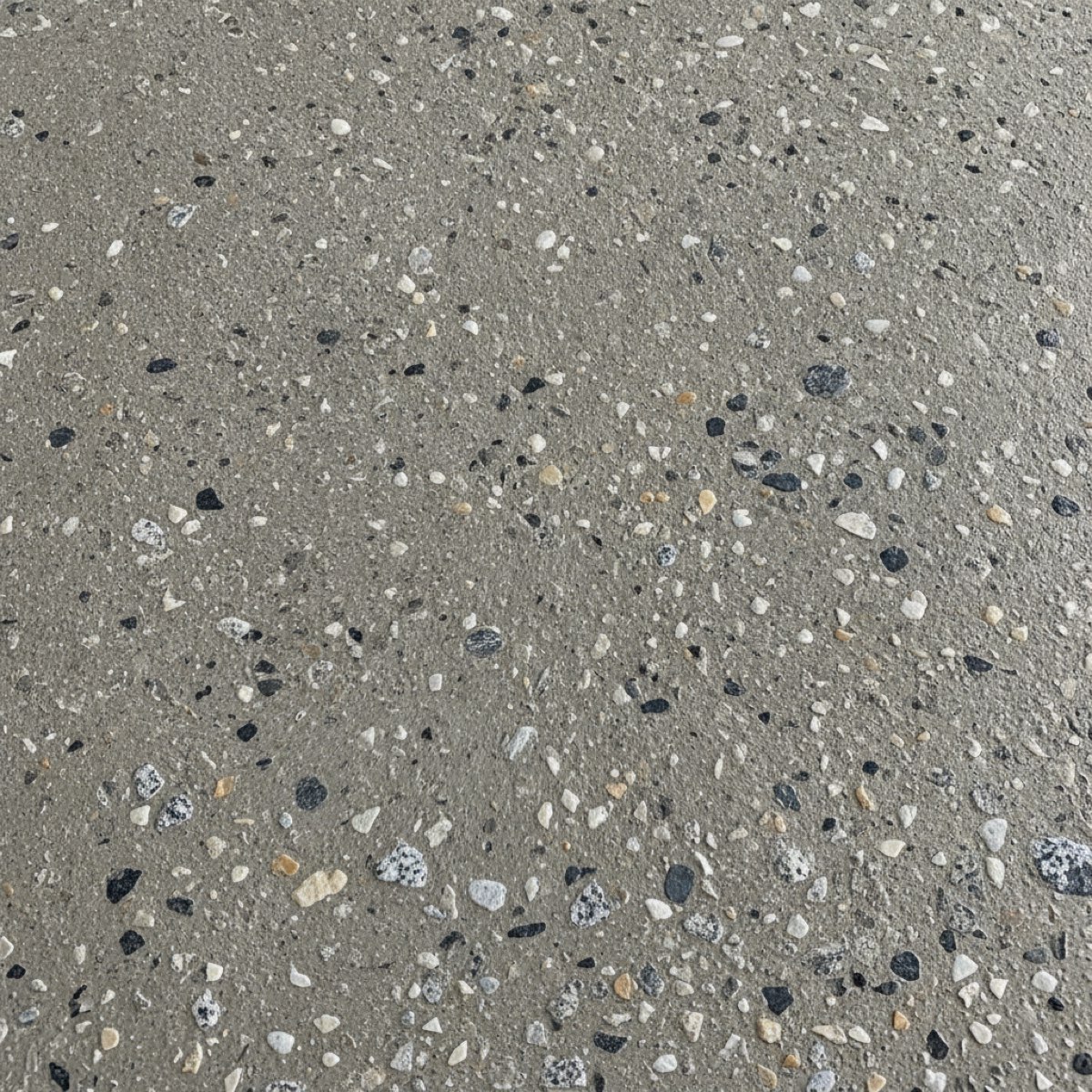
Everything starts with the grinder. We mechanically grind the whole slab with a diamond planetary grinder, which cuts through the surface laitance (the weak, dusty top layer left when concrete is floated) and opens up the concrete so the resin has a mechanical key to bond into. This is the single most important stage and the one cheap jobs skip. Resin laid on an unground slab is bonding to dust, and dust lets go. Grinding also flattens high spots and gives us a clear view of the slab's true condition.
Stage 2: Repairing cracks, joints and contamination
With the slab ground and the dust vacuumed away, the real state of the concrete shows. This is where we deal with whatever the floor needs before it can take a coating:
- Cracks and joints cut out, filled with a resin repair mortar and, where needed, reinforced so they do not telegraph back through the new floor.
- Oil and grease contamination, common in a garage or workshop, ground out or treated, because resin will not bond through oil.
- Dips, falls and pitting filled and levelled so the finished floor is flat and even.
- Moisture checked; on a slab with a damp issue we build in a moisture barrier before the floor goes on.
How much of this a floor needs is the biggest reason two jobs of the same size cost different amounts, which is the story we tell in our cost guide. If your slab is cracked, painted or oily, our guide to laying resin over cracked or old concrete covers what each problem takes to put right.
Checking the slab for damp
One part of this stage is easy to skip and expensive to get wrong: moisture. Resin seals the floor, so any damp rising through the slab has nowhere to go and pushes the coating off from underneath. Before we commit to laying, we check the slab for moisture. On a sound, dry slab the floor goes straight on. Where a slab shows a damp issue, for instance an older floor with no damp-proof membrane under it, we build in a moisture barrier first so the resin has a dry, stable surface to bond to rather than fighting the damp for the life of the floor.
Stage 3: Priming
Once the slab is sound, flat and clean, we apply a primer. The primer soaks into the opened concrete and creates the chemical and mechanical link between the slab and the resin build that follows. It also seals the surface so the body coats lay down evenly rather than being drunk into the concrete. Skipping or skimping the primer is another quiet way a floor fails early.
Why the boring stages matter most
Stage 4: The resin build and finish
Now the floor goes down. Depending on the system, this is one or more body coats of resin laid to a real, measurable thickness, with the decorative finish worked in as it goes:
- For a flake floor, vinyl chips are broadcast into the wet coat, then the excess is scraped back once cured.
- For a metallic floor, the pigments are hand-worked on site to create the marbled, three-dimensional effect, which is why this finish takes the most skill and time.
- For a solid colour, the body coat is the colour, laid to a clean, even finish.
- For grip, an anti-slip aggregate is broadcast into the coat, as on our anti-slip floors.
Where an area sees water or spills, the grip built into the topcoat is what keeps it safe. Slip resistance in the UK is measured by the Pendulum Test Value, the method the Health and Safety Executive uses for assessing floors, where a PTV of 36 or above is rated a low slip risk in the wet. A smooth gloss topcoat is fine for a dry floor, but for anywhere prone to getting wet we broadcast an aggregate into the topcoat to bring the wet grip into that low-risk range.
Want this done properly on your floor?
Send us the details of the space and we will spec the right build for it, then quote the whole job as one fixed price in writing.
Stage 5: Sealing with a topcoat
The final stage is the topcoat, a clear seal that locks in the finish, adds the gloss or satin sheen, and provides the surface that actually takes the wear, the chemicals and the light. On floors that see sunlight or need a fast turnaround, this is often a UV-stable, fast-cure topcoat, which is why many of the best floors are an epoxy build with a polyaspartic seal, a trade-off we cover in our epoxy vs polyaspartic guide.
How long it takes, and curing
Most domestic garages are two to three days on site, depending on how much repair the slab needs and how many coats the system has. After that, the floor cures: typically light foot traffic within a day or so, and full hardness for vehicles and heavy loads around seven days for an epoxy build, sooner with a fast-cure system. The floor is usable well before it is fully cured; you just hold off parking on it until it has reached full strength.
What it should be like when we leave
A proper job is a tidy one. We sheet up, contain the dust from grinding as far as possible, vacuum the space twice, and take every offcut, tin and rag away with us. You should be left with a clean, flat, seamless floor and a building tidier than we found it, not a mess to sort out yourself.
About this guide
Who wrote this
This guide is written by the Obsidian Resin team and describes the actual process we follow on garages, workshops, showrooms and commercial floors across Leicestershire and the East Midlands. The stages here are the ones we work through on every floor, in this order, every time.
Our honest position
We lay these floors for a living, so we have a commercial interest in you choosing a professional job. We have set the process out in full partly so you can spot a corner-cutting quote: if no one mentions grinding the slab, that is the corner being cut, whoever lays it.
Frequently asked questions
- How long does it take to lay a resin floor?
- Most domestic garages are two to three days on site, depending on slab repair and the number of coats. Larger or more involved floors take longer.
- Why is grinding the slab so important?
- Grinding cuts through the weak, dusty surface layer and opens the concrete so the resin bonds into solid material. Without it the resin bonds to dust and lifts. It is the stage that decides whether the floor lasts.
- How long before I can use the floor?
- Usually light foot traffic within a day or so, and full strength for parking and heavy loads around seven days for an epoxy build, sooner with a fast-cure system.
- Can you lay resin in winter or in a cold garage?
- Standard epoxy needs reasonable warmth to cure. In cold conditions we either provide heat or use a fast-cure system that cures across a wider temperature range. We work this out when we quote.
- How much mess does it make?
- Grinding creates dust, which we contain and vacuum up. We sheet off the space, clean down twice and take all waste away, so you are left with a clean floor, not a clean-up job.