It is the worry that stops a lot of people picking up the phone: my garage floor is cracked, stained and rough, surely it is too far gone for a smart resin floor? In the large majority of cases, no. A tired slab is the normal starting point, not a deal-breaker, because the whole first half of the job is putting the slab right before any resin goes on. Here is what can and cannot be resined over, and how each problem is handled.
The short version: it depends on the slab, and most slabs are fine
Resin bonds to sound concrete, so the question is never really can you resin over a damaged floor, it is can the damage be repaired so the slab is sound. For everyday wear, cracks, stains, old coatings and unevenness, the answer is almost always yes, and it is routine work. The full process is set out in our guide to how a resin floor is installed; this guide focuses on the problem floors specifically.
Cracks
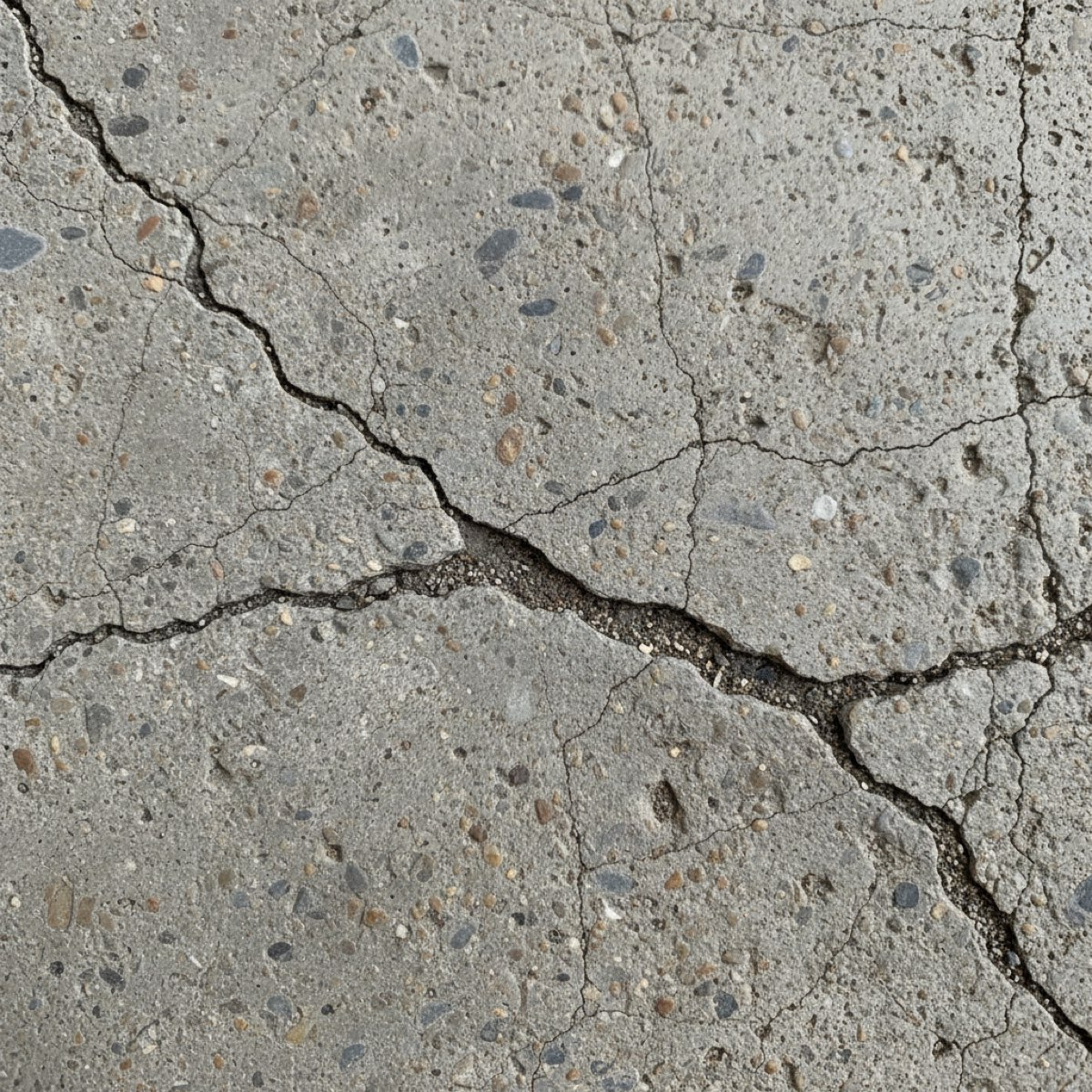
Cracks are the most common worry and usually the least serious. Most cracks in a domestic slab are hairline or old settlement cracks that have long since stopped moving. We cut them out, fill them with a resin repair mortar, and where needed bridge them so they do not reflect back through the new surface. Done properly, the crack disappears under the floor and does not come back.
The exception is a crack caused by ongoing structural movement, a slab that is still shifting, subsiding or heaving. No floor coating can hold a slab together that is actively moving; the movement has to be diagnosed and dealt with first. This is rare in a normal garage, but it is the one case where we will tell you the slab needs attention before we can think about resin. If we suspect ongoing or structural movement, we will say so honestly and recommend a structural engineer assesses the slab before we quote or lay anything, because that is a question for an engineer, not a flooring contractor. We cover this from the other angle in our FAQ on whether resin cracks if the slab cracks.
The honest test
Old paint and coatings
Floors that have been painted before, often with a coat that is now peeling, are everywhere. You cannot lay resin over failing paint, because the resin would only be as well-stuck as the paint under it. So the old coating is ground off entirely and the slab taken back to clean concrete before we start. This is exactly why we recommend resin over repainting in the first place, as we explain in our resin versus floor paint guide.
Oil, grease and contamination
A garage or workshop slab that has soaked up years of oil and brake fluid is a classic case. Resin will not bond through oil, so contamination is ground out and, where it has gone deep, treated until the slab is clean enough to take a coating. Heavy, long-standing contamination takes more work, which is reflected in the quote, but it is rarely a reason a floor cannot be done.
Uneven, pitted or rough slabs
An uneven floor, with dips, falls, pitting or a rough power-floated finish, is brought back to a flat, even surface as part of preparation. Grinding takes off high spots and the rough top layer; dips and pits are filled and levelled. The finished resin floor is only as flat as we make the slab beneath it, so this levelling is part of the job, not an extra.
Worried your floor is too far gone?
Send us a few photos of the worst of it. We will tell you honestly whether it is a straightforward job, and put a fixed price on it in writing.
When resin is not the right answer (yet)
To be straight with you, there are a few floors where resin should wait. A slab with active structural movement needs that movement resolved first. A slab with a serious, untreated damp problem needs the moisture dealt with, or a moisture barrier built in, before a floor goes on. And a slab so broken up that repairing it would cost more than relaying it may be better replaced. These are the minority, and in every case the right move is to look at the floor and tell you the truth, rather than pour resin over a problem and hope.
About this guide
Who wrote this
This guide is written by the Obsidian Resin team. Tired, cracked and stained slabs are the normal starting point for the floors we lay across Leicestershire, so the repairs described here are everyday work for us, not exceptions.
Our honest position
We have a commercial interest in laying your floor and we are upfront about that. We have also been clear about the handful of cases where resin should not go straight down, because telling you that before the job is the difference between a floor that lasts and a callback.
Frequently asked questions
- Can you lay resin over a cracked garage floor?
- In most cases, yes. Old, settled cracks are cut out, filled and bridged so they do not show through. The only exception is a slab with live structural movement, which has to be dealt with first.
- Do I need to remove old floor paint first?
- Yes, and we do it as part of the prep. Failing paint is ground off and the slab taken back to clean concrete, so the resin bonds to the slab and not to a failing coat.
- My garage floor is covered in oil. Is it ruined?
- Almost never. Oil and grease are ground out and treated until the slab is clean enough to bond to. Heavy contamination adds to the prep, but it rarely stops the floor being done.
- Can you fix an uneven floor with resin?
- We level it as part of preparation, taking off high spots and filling dips, so the finished floor is flat. The resin is only as level as the slab we prepare beneath it.
- How do I know if my slab is too far gone?
- Send photos or let us take a look. The things that genuinely rule resin out, live structural movement, serious untreated damp, a slab past saving, are uncommon, and we will tell you straight if any apply.