Walk into any DIY shop and you can buy a tin of garage floor paint for the price of a takeaway. So why would anyone pay for a resin floor instead? The honest answer is that they are not the same product doing the same job at different prices. They are different things, and the gap between them is mostly about what happens six months and two years down the line. Here is the straight comparison.
The quick comparison (scan this first)
| Resin floor | Floor paint | |
|---|---|---|
| What it is | A thick, bonded resin build | A thin brushed or rolled coating |
| Slab preparation | Mechanically ground and repaired | Often just a clean, sometimes etched |
| Thickness | A real, measurable build | A thin film |
| Hot-tyre pickup | Resists it | Common failure, lifts off |
| Peeling and flaking | Bonds and stays down | Peels as the bond fails |
| Oil and chemicals | Shrugs them off | Stains and softens |
| Lifespan | Many years | Often one to three years on a working floor |
| Upfront cost | Higher | Low |
The table tells the story, but it is worth understanding why paint fails where resin holds, because it comes down to two things: bond and thickness.
Why floor paint peels (and resin does not)
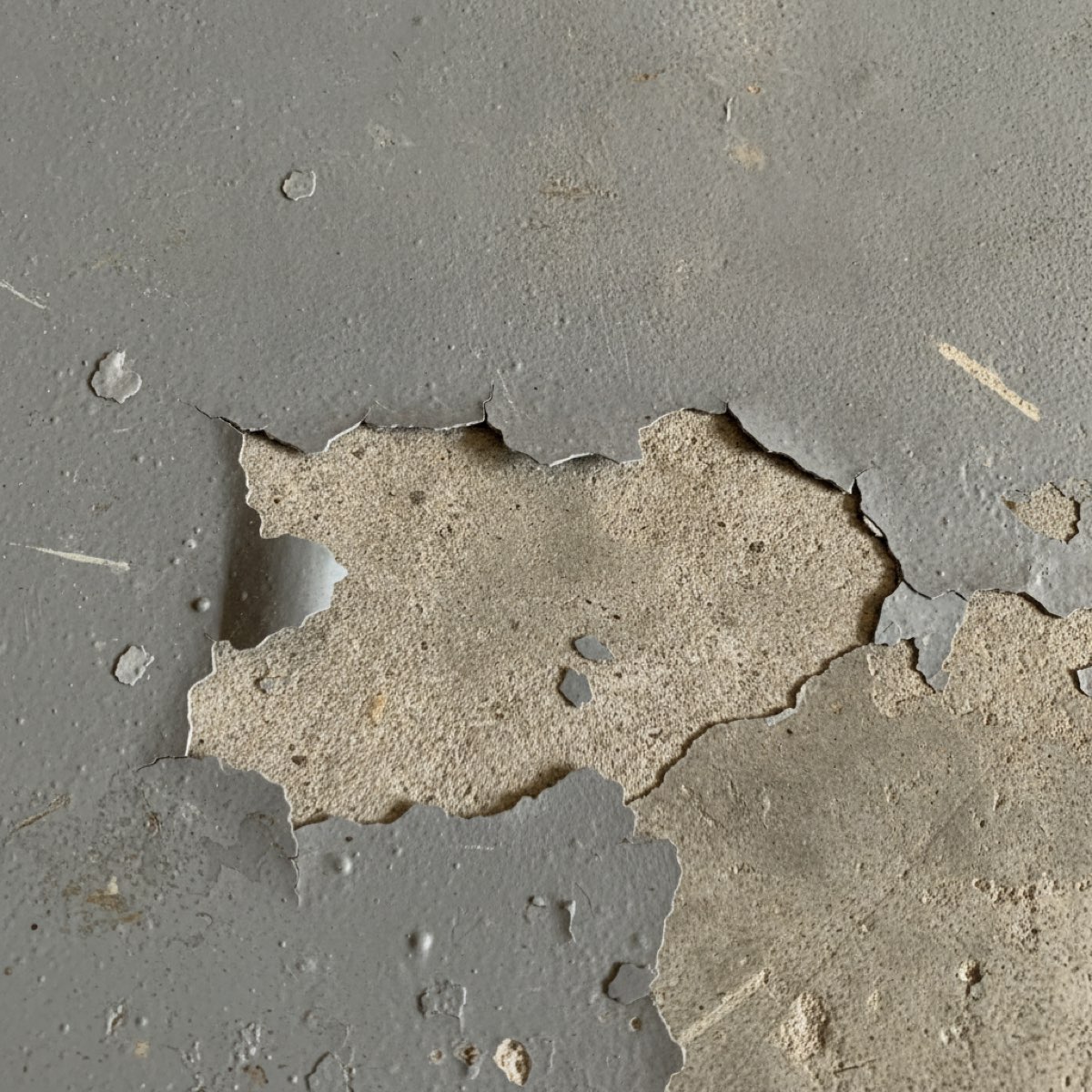
Most floor paint fails for the same reason: it never had anything to grip. Concrete looks solid but the surface is dusty, sealed with laitance from when it was floated, and often soaked in old oil. Paint brushed onto that sits on top of the dust rather than bonding to the concrete, so the first time a warm tyre, a dragged toolbox or a damp patch goes to work on it, it lifts. Hot-tyre pickup, where the rubber of a parked car bonds to the paint and pulls it off as you drive away, is the classic example.
An epoxy garage floor coating starts the other way round. We mechanically grind the slab with a diamond planetary grinder to cut through the dust and laitance and open the concrete, repair cracks, and remove contamination, so the resin bonds into honest concrete. Then it is poured as a thick build rather than a thin film. Bonded and built up, it has nothing to peel away from.
The part the tin does not mention
Toughness in a real garage
A garage floor takes a beating most rooms never see: point loads from a jack, dropped spanners, dragged furniture, hot tyres, petrol, oil and brake fluid. Paint is a thin film, so it scratches through to the concrete and stains where fluids sit. A resin build, especially a flake or anti-slip system, has the body to take impact and the chemistry to ignore the spills, and it wipes clean rather than soaking them up. For a workshop that earns its keep, that difference is the whole point.
Looks and finish
Paint gives you a flat colour and not much else. Resin gives you a genuine finished floor: a clean solid colour in gloss or satin, a hard-wearing flake blend, or a deep metallic showpiece. Beyond the look, the resin surface is seamless and non-porous, so there is nowhere for dirt and oil to lodge and it stays looking finished rather than tired.
Tired of painting the floor every couple of years?
Tell us about your garage or workshop and we will spec a floor that bonds properly and lasts, with one fixed-price written quote.
Cost: cheap twice, or right once
Paint wins on the day you buy it and loses over the years that follow. A tin is cheap, but a working floor often needs stripping and repainting every year or two, and stripping failed paint is messy, slow work. A resin floor costs more upfront but is laid once and left, so over the life of the floor it is frequently the cheaper option as well as the better one. We break down what drives the price in our resin flooring cost guide.
When floor paint is actually fine
To be fair to paint, it has its place. If the floor sees only light foot traffic, never a car or chemicals, and you are happy to redo it now and then, a decent two-pack paint on a well-prepared slab can be a sensible budget choice. The trouble starts when paint is asked to do a resin floor's job: take vehicles, oil and daily abuse. That is the job it cannot hold.
About this guide
Who wrote this
This guide is written by the Obsidian Resin team. A good share of the floors we are called out to are failed paint jobs that need stripping back before we can lay anything, so this comparison comes from scraping a lot of peeling paint off a lot of garage slabs across Leicestershire.
Our honest position
We lay resin, so we have a commercial interest and we are upfront about it. We are not going to pretend paint is useless, because for a light-use floor on a budget it is fine. But if you are painting a working garage floor every couple of years, we think you are paying twice for the wrong product, and this guide explains why.
Frequently asked questions
- Why does my garage floor paint keep peeling?
- Almost always because the slab was not mechanically ground before painting. Paint sits on the surface dust and laitance instead of bonding to the concrete, so heat, moisture and tyres lift it. Grinding first is what stops that.
- Is resin flooring just expensive paint?
- No. Paint is a thin film; resin is a thick, chemically bonded build laid onto a ground and repaired slab. They behave completely differently under load, heat and chemicals.
- Can you lay resin over old floor paint?
- Not over it as-is. Old paint has to be removed and the slab ground back so the resin bonds to concrete, not to a failing coat of paint. We handle that as part of the prep.
- What is hot-tyre pickup?
- When a warm tyre bonds to a painted floor and peels the paint off as you drive away. It is a common paint failure and one a properly bonded resin floor resists.
- Is resin worth it for a garage I barely use?
- If it is genuinely light use and you do not mind redoing paint occasionally, paint may be enough. For any floor that sees a car, tools or chemicals, resin lasts far longer and usually works out cheaper over time.