Once you have settled on a resin-bound driveway, the fun part is choosing how it looks. There is more choice than most people expect, and the colour behaves differently from a painted or stained surface. Here is how resin driveway colour actually works, the popular options, and how to pick one that still looks right in ten years.
How resin driveway colour actually works
This is the bit worth understanding first, because it shapes everything else. The colour of a resin-bound driveway comes from the aggregate, the small natural stones mixed into the resin, not from a pigment or dye painted on top. The resin binding them is effectively clear. So when you choose a colour you are really choosing a stone blend, and because the colour is the stone all the way through, it does not fade, wear off or patch the way a coloured coating does.
The stones themselves are usually quartz, granite or marble, with recycled glass as an option that catches the light. Most domestic driveways use a 1 to 3mm graded stone for a smooth, even finish; a slightly coarser 2 to 5mm is chosen for a bit more texture, or for slopes where the extra grip helps. Many blends actually mix two sizes together, which is not only a look, it packs the stone tighter and makes the surface more hard-wearing under car wheels. Smaller stone reads smoother and more formal, larger stone reads more natural.
Popular resin driveway colours
| Colour family | The look | Suits |
|---|---|---|
| Golds and buffs | Warm, natural, traditional | Period homes, cottages, rural and stone properties |
| Greys and silvers | Clean, modern, understated | New-builds and contemporary homes |
| Dark grey and charcoal | Sleek, high-contrast, hides marks | Modern homes wanting a bold, low-fuss finish |
| Black and near-black | Dramatic, sharp against light walls | Contemporary frontages and feature drives |
| Browns and reds | Earthy, blends with brick | Red-brick and mixed-material houses |
| Blends | Multi-tone, natural depth | Anywhere you want a softer, less uniform look |
Grey is the most-asked-for colour on modern homes, with black and dark grey close behind for a sharper look. Warmer golds and buffs stay the favourite on older and rural properties. There is no wrong answer, but the blend reads very differently in daylight against your actual walls, so always view a sample outdoors before deciding.
The colour is the stone, not a dye
Matching the colour to your home
The blends that look best tend to take a cue from the house rather than fighting it. On a traditional or rural property, warm golds and buffs sit naturally with brick and stone. On a newer estate home, greys and silvers look crisp and contemporary. Red-brick frontages often work well with earthy browns or a warm blend, while a bold charcoal or black can look striking against light render. If in doubt, a mid-tone blend is the safe choice that flatters almost any frontage.
Borders, patterns and design touches
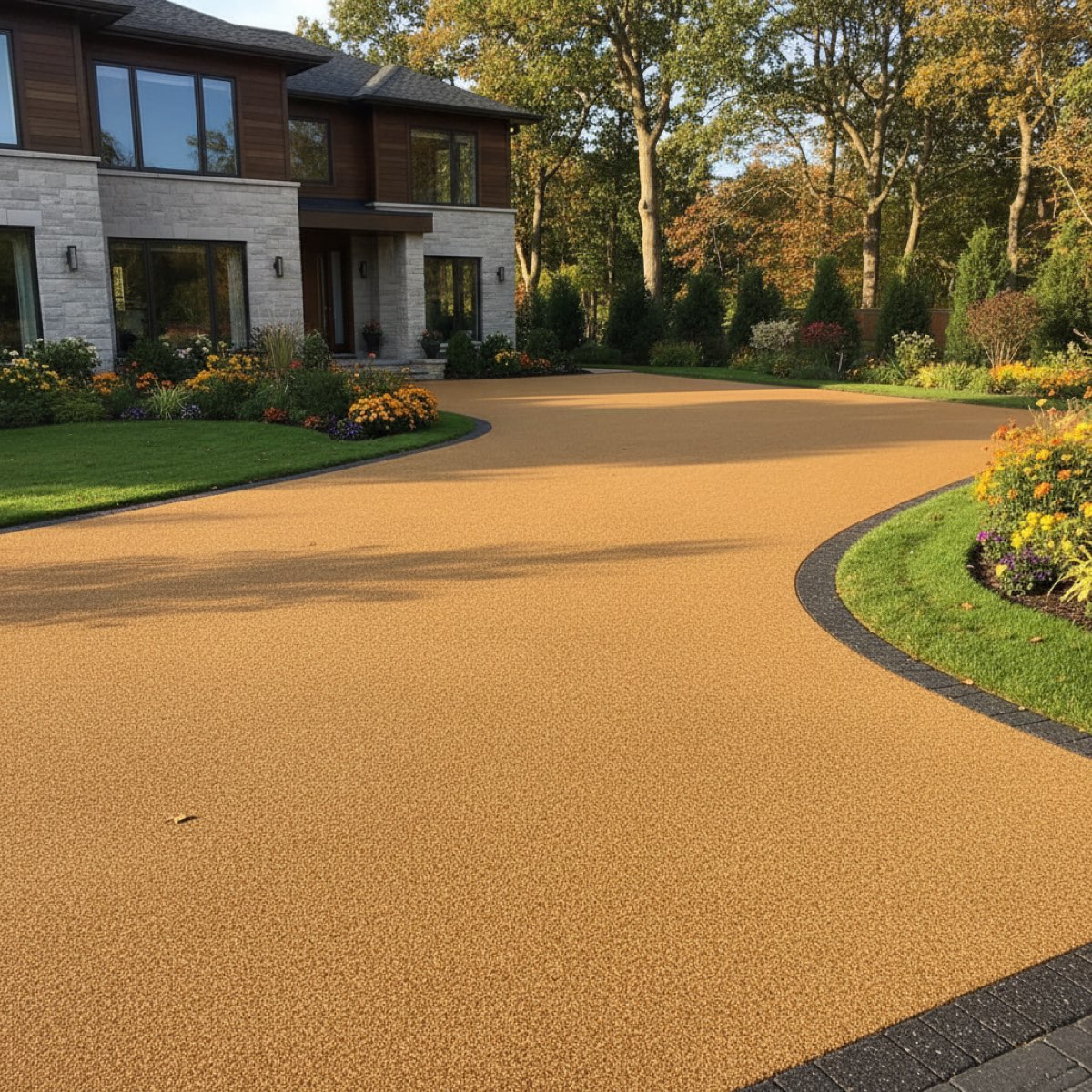
Colour is only part of the look. A contrasting border, a darker frame around a lighter drive, for example, is the most popular design touch and instantly sharpens the edges and defines the space. Beyond that you can blend two tones, run a matching path and driveway for a joined-up frontage, or set in a strip to break up a large area. Aggregate size changes the feel too: a finer stone reads smoother and more formal, a slightly larger one more natural.
Common design choices people make:
- A contrasting border to frame the drive and sharpen the edges.
- Matching the driveway and front path so the frontage reads as one.
- A blended, multi-tone mix for a softer, more natural finish.
- A finer aggregate for a smart, formal look or a larger one for a relaxed, natural one.
Seen a colour you like?
Tell us the rough size of the drive and the look you are after. We will talk through the blends that suit your home and put it in a fixed-price written quote.
Will the colour fade or discolour?
This is where the resin, not the stone, decides the outcome, and it is the single most important question to ask an installer. There are two types. UV-stable resin (the technical name is aliphatic) stays clear in sunlight, so the drive looks the same years on as the day it went down. Non-UV-stable resin (aromatic) is cheaper, quotes better, and visibly yellows in roughly one to three years of sun, worst of all on pale, light-coloured blends. Once aromatic resin has ambered, no sealer brings it back; only resurfacing does. So the one question that protects you is simple: "is your resin UV-stable?" We only use UV-stable resin, which is dearer per tub and the reason a suspiciously cheap quote is worth a second look.
Beyond the resin, colour holds because it is the aggregate, so there is no coating to wear back or peel. We go into what makes the whole surface last in our guide to how long a resin driveway lasts.
So how should you choose?
Get physical samples, look at them outdoors in daylight against your own walls, and decide border and path at the same time so the frontage is planned as a whole. Then it is a question of size and base, which is what drives the price, covered in our guide to what a resin driveway costs. If you are still weighing resin against other surfaces, we compare it with block paving and tarmac.
About this guide
Who wrote this
This guide is written by the Obsidian Resin team. We lay resin-bound driveways across Leicestershire and help homeowners choose a blend that suits their property, so we have seen which colours wear their years well and which frontages they flatter.
Our honest position
We would rather you picked a colour you will still like in ten years than the boldest one in the sample box. We will give you a straight opinion on what suits your home, and we always show samples outdoors before anything is ordered.
Frequently asked questions
- What colours do resin driveways come in?
- A wide range, because the colour comes from the natural stone aggregate: pale golds and buffs, greys and silvers, dark grey and charcoal, black, browns and reds, plus multi-tone blends. You are effectively choosing a stone blend rather than a paint colour.
- What is the most popular resin driveway colour?
- Grey is the most requested on modern and new-build homes, with black and dark grey popular for a sharper look. Warm golds and buffs remain the favourite on traditional and rural properties. A mid-tone blend flatters almost any frontage.
- Do resin driveways fade or discolour?
- A quality resin-bound driveway with UV-stable resin holds its colour for years, because the colour is the stone itself rather than a coating that can wear off. A cheaper non-UV-stable resin can amber slightly in strong sun, which is one reason a bargain quote can cost you the look later.
- Can you add a border to a resin driveway?
- Yes, and a contrasting border is the most popular design touch. It frames the drive, sharpens the edges and defines the space. You can also blend tones, match the path to the drive, or set in a contrasting strip.
- Can you match a resin driveway to my house?
- Yes. We help you choose a blend that takes its cue from your brick, stone or render, and we show samples outdoors in daylight against your own walls before anything is ordered, since a blend can look very different in the box to on the ground.