Tarmac and resin are often the shortlist when you want a smooth driveway rather than block paving or gravel. They can look similar from a distance, but they are very different surfaces underneath, and the right choice usually comes down to budget against looks and drainage. Here is how a resin-bound driveway compares with tarmac, including where tarmac is the sensible call. If block paving is also in the mix, see our resin driveway vs block paving guide.
The quick comparison (scan this first)
| Resin-bound driveway | Tarmac | |
|---|---|---|
| Colour and finish | Wide range of aggregate colours, decorative | Plain black (or red at extra cost) |
| Permeable (drains through) | Yes | No, water runs off |
| Hot weather | Stays firm | Can soften and go tacky in strong sun |
| Turning and scuffing | Resists scuffs and turning marks | Can scuff and rut where wheels turn |
| Oil and fuel | Oil-resistant, wipes clean | Petrol, diesel and oil dissolve the bitumen |
| Weeds and edges | Seamless, no joints to weed | Weeds can creep in at cracked or worn edges |
| Upfront cost | Higher | Lower |
| Kerb appeal | Premium, decorative | Plain, utilitarian |
In short, tarmac wins on price and resin wins on looks and drainage. Here is what sits behind each of those differences.
Cost: tarmac's real advantage
There is no getting around it: tarmac is usually the cheaper surface to lay, especially over a large area, and it goes down fast. If the priority is covering a big drive with a sound, hard-wearing surface for the lowest outlay, tarmac is genuinely hard to beat and we will not pretend otherwise. Resin costs more because of the materials and the hand-trowelling involved. What resin buys for that extra is the finish, the colour choice and the permeability, so the question is whether those are worth it to you. Neither has a fixed rate; both depend on area, base and access, as we set out in our cost guide.
Looks and colour
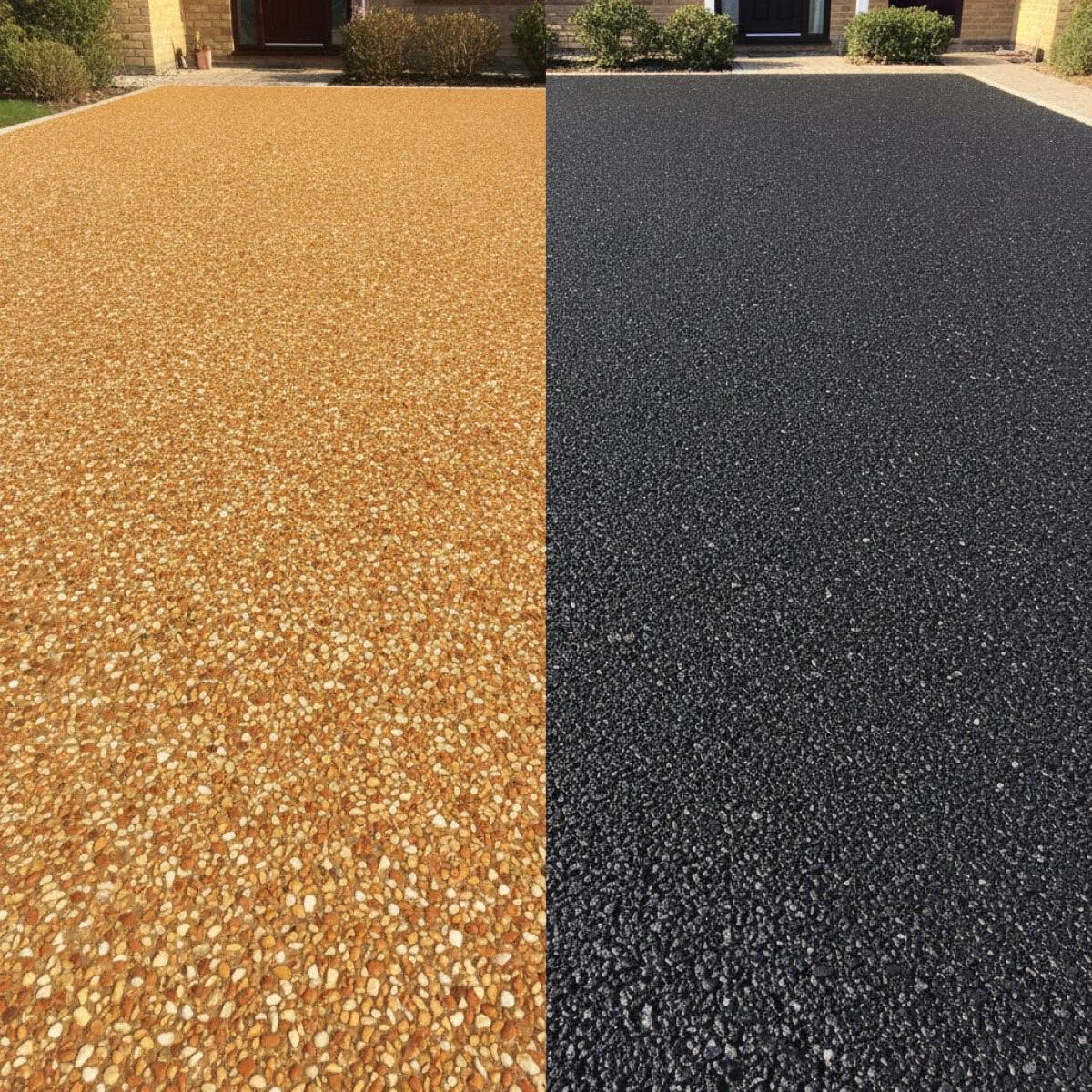
This is the clearest everyday difference. Tarmac is black, and while it looks crisp when freshly laid it greys and fades over the years, and your only real colour alternative is red at extra cost. Resin-bound comes in a wide range of natural aggregate blends, from pale golds to greys and dark browns, so it can be matched to the house and the frontage. For many people the decorative finish is the whole reason they choose resin over a cheaper tarmac drive.
Permeability and drainage rules
Resin-bound is permeable: rain drains straight through it into the ground rather than sheeting off into the road or a gully, which makes it easy to lay within the UK drainage guidance for front gardens. Tarmac is not permeable, so on a new or enlarged driveway you have to plan where the run-off goes, whether that is a drainage channel, a soakaway or a permeable border. We explain the rules in our guide to planning permission for a resin driveway.
Hot weather and turning
Deciding between resin and tarmac?
Tell us the rough size and what is down now. We will give you an honest steer on whether resin is worth it over tarmac for your drive, in a fixed-price written quote.
Wear, scuffing and softening
Both are hard-wearing, but they wear differently. Tarmac is bound with bitumen, which softens in a hot spell and can scuff, ridge and mark where wheels turn, and it has one real weakness resin does not: petrol, diesel and oil dissolve the bitumen binder, so drips under a car soften and pit the surface over time. A resin-bound surface stays firm in the heat, is oil-resistant and wipes clean, and because it has no joints there are no edges for weeds to creep into. Tarmac edges, by contrast, are where cracking and weed growth tend to start as the surface ages.
Longevity and repairs
Laid well on a sound base, both last many years, but tarmac asks for more upkeep along the way. A tarmac drive typically wants resealing every few years and tends to need resurfacing somewhere around the eight-to-twelve-year mark as it oxidises, cracks and its edges wear, and patches rarely blend invisibly. A resin-bound driveway typically holds its finish for around 15 to 25 years with little more than the occasional wash, as we cover in how long a resin driveway lasts. That upkeep cycle is why tarmac's cheaper start can even out over time. As with any driveway, the base and the workmanship matter more than the surface for how long it stays good.
So which should you choose?
Choose tarmac when:
- Budget is the deciding factor, especially over a large area.
- You want a plain, functional, hard-wearing surface and are not fussed about colour.
Choose a resin-bound driveway when:
- You want a decorative finish and a choice of colour to suit the house.
- You want it permeable, with no puddles and easier drainage compliance.
- You want a surface that stays firm in the heat and has no joints to weed.
About this guide
Who wrote this
This guide is written by the Obsidian Resin team. We lay resin-bound driveways across Leicestershire, and tarmac is the surface we are most often asked to compare against on price, so we have this conversation a lot.
Our honest position
We lay resin, not tarmac, so we have a commercial interest, and we are upfront about it. If budget is tight and you just need a large, plain, durable drive, tarmac is often the sensible call. Where the look, the colour and the drainage matter to you, that is where resin earns its extra cost.
Frequently asked questions
- Is a resin driveway better than tarmac?
- It depends what you value. Resin-bound wins on looks, colour choice, drainage and staying firm in the heat. Tarmac wins on upfront cost and speed, especially over a large area. Neither is simply better; they suit different priorities.
- Is resin more expensive than tarmac?
- Usually, yes. Tarmac is generally the cheaper surface to lay, particularly on a big drive. Resin costs more for the materials and hand-trowelling, and what you get for it is the finish, the colour range and the permeability.
- Does resin or tarmac drain better?
- Resin-bound is permeable, so water drains straight through it, which makes it easier to meet front-garden drainage rules. Tarmac is not permeable, so run-off has to be planned for with a channel, soakaway or permeable border.
- Does tarmac soften in hot weather?
- It can. Tarmac is bitumen-bound, so in strong sun it may soften and go slightly tacky and scuff more easily where wheels turn. A cured resin surface stays firm in the heat.
- Can you lay resin over an existing tarmac driveway?
- Often, yes, if the tarmac is sound, stable and well-drained it can serve as a base for a resin-bound surface. If it is cracked, soft or moving, it needs sorting or replacing first. We check the existing surface before advising.