Search for a garage floor upgrade and the first thing you find is interlocking tiles: cheap PVC or polypropylene panels, sold in packs, and laid by clicking them together yourself in an afternoon. So why would anyone pay to have an epoxy resin floor fitted instead? They are not really the same product. Tiles are a loose-laid covering you drop on top of the slab; resin is a bonded floor that becomes part of it. The right choice depends on how long you want the floor to last and how hard it is going to work. Here is the honest comparison.
The quick comparison (scan this first)
| Resin floor | Garage floor tiles | |
|---|---|---|
| What it is | A bonded resin floor laid onto the slab | Interlocking or peel-and-stick panels laid on top |
| Who fits it | Professionally installed | DIY, click together yourself |
| Seams and joints | None, one seamless surface | Joints and edges between every tile |
| Spills and water | Bonds to the slab, nothing gets under | Liquid runs into the joints onto the slab |
| Hot-tyre lift | Resists it | Tiles can curl, shift or stick to a warm tyre |
| Cleaning | Wipes or hoses clean | Dirt and oil lodge in the seams |
| Lifespan | Many years | Fine while loose-laid, but a temporary fix |
| Upfront cost | Higher, fitted | Lower, DIY-friendly |
The table covers most of the decision. The detail below explains why the seams are the heart of it, and where tiles genuinely make sense.
Up-front cost: is resin or epoxy cheaper than garage floor tiles?
Up front, no, and it is worth being straight about it. Interlocking and peel-and-stick tiles are cheap and you fit them yourself, so on the day you buy them they cost a fraction of a fitted epoxy floor. There is no labour, no grinding and no waiting for anything to cure. If money is the only question and you are happy to do the work, tiles are the cheaper route in.
A resin floor is a different proposition: a professionally laid, bonded surface rather than a covering you lay loose. That costs more up front because someone grinds the slab, repairs it and pours the floor. What it buys you is a floor that is fitted once and left, with nothing to lift or replace. Neither has a single headline price, and we do not quote one here, because it depends on the slab, the size and the finish. Our resin flooring cost guide walks through what actually drives the number.
The trade-off in one line
Joints versus a seamless floor
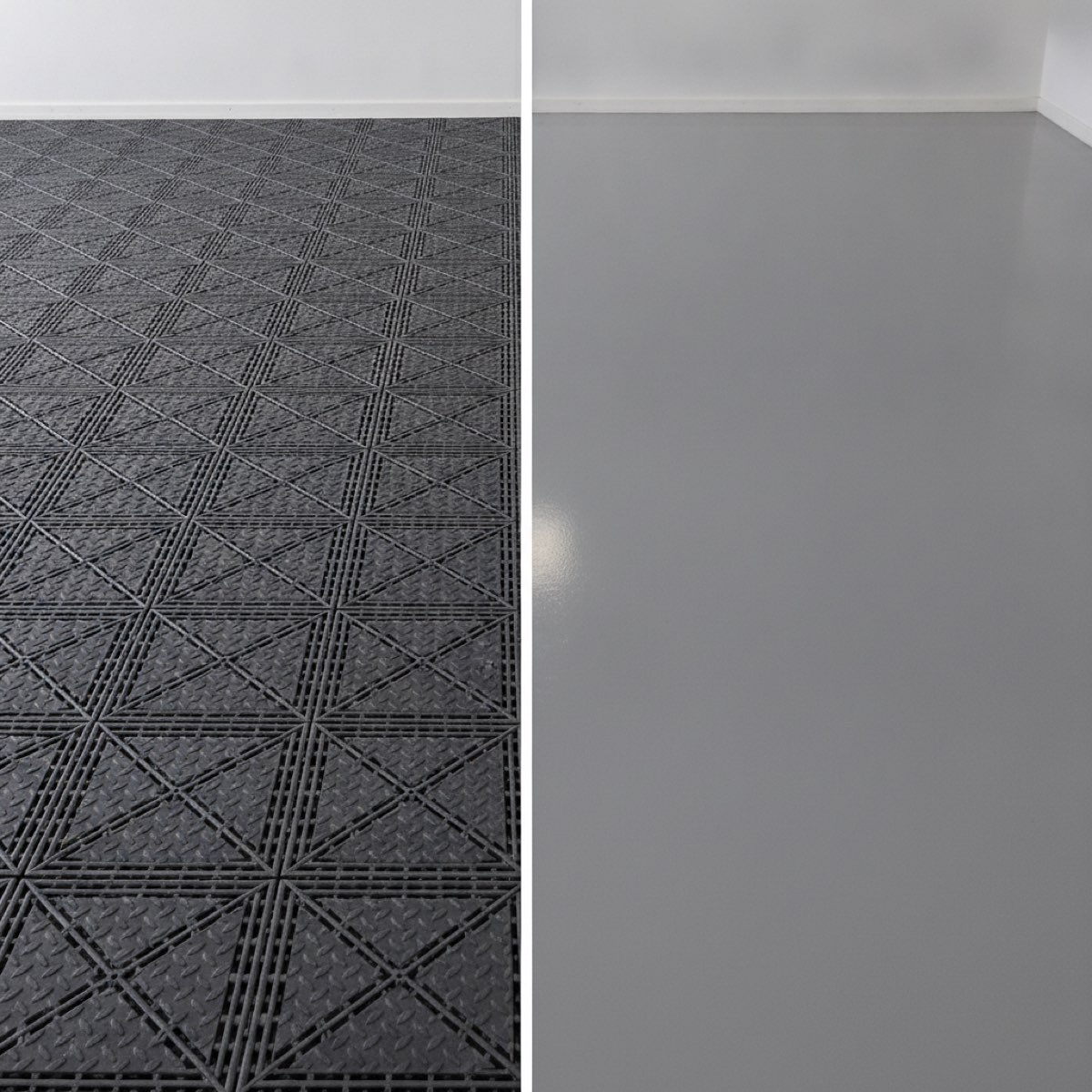
This is the real difference between the two. Every tiled floor is a grid of joints and edges, and a garage floor is exactly the place that punishes joints. Oil, brake fluid, dirt and washing-down water all find the seams, run into them and sit there, so the floor looks grubby in the lines no matter how often you clean the faces. Over time the joints are also where tiles work loose and start to lift.
A resin floor has no joints at all. It is poured and cured as one continuous skin across the whole slab, right into the corners, so there is nowhere for dirt or liquid to lodge and nothing to come apart. That is the same seamless surface that makes resin the standard in a workshop, where spills are constant. For a working garage it is the single biggest reason people move on from tiles.
Hot-tyre lift and heavy loads
Park a car on a tiled floor in summer and the warm tyre can grab the tile, so it shifts, curls at the edge or sticks and pulls up as you drive off. PVC tiles are the most prone to it, as the plastic softens in heat, though rigid polypropylene tiles move at the joints too. Heavy point loads from a jack or a loaded trolley can press tiles out of line as well, and once one tile moves the joint opens and the next one follows. They are loose-laid, so movement is always on the cards.
A bonded resin floor does not move because it is chemically locked to the slab. A warm tyre, a jack or a dragged toolbox has nothing to lift, so the floor stays flat and intact. That bond is the whole point of grinding the slab first: the resin keys into honest concrete rather than sitting loose on top.
Moisture: what sits where
Liquid does not stay on top of a tiled floor. It runs into the joints and down the edges, so a spill, a wet car or a washing-down ends up on the slab under the tiles, out of sight where it cannot dry out properly. On a peel-and-stick floor that can also work away at the adhesive over time.
Because a resin floor is bonded to the slab with no gaps, there is nowhere for liquid to get underneath. A spill stays on the surface where you can see it and wipe it up. That is one less thing quietly going wrong out of sight.
Want a garage floor with no joints to lift?
Tell us about your garage and we will spec a bonded resin floor and send one fixed-price written quote.
Cleaning and durability in a real garage
A garage floor takes oil, brake fluid, dropped spanners, hot tyres and the weight of a car. A resin build, especially a hard-wearing flake system, has the body to take impact and the chemistry to ignore the spills, and because it is seamless it wipes or hoses clean in one pass. Tiles cope with foot traffic and a parked car well enough, but the seams hold the dirt and the faces scuff, and a damaged tile is something you live with until you swap it. If you want a showpiece rather than a workhorse, a deep metallic floor is a finish tiles cannot touch.
When garage floor tiles are actually the right call
To be fair to tiles, they have a real place. Reach for tiles when:
- The garage is rented and you cannot or do not want to alter the slab.
- You want a quick, temporary tidy-up rather than a floor for the next twenty years.
- It is a pure DIY job on a tight budget and you are happy to redo it down the line.
Where tiles struggle is when they are asked to do a fitted floor's job: take a daily car, oil and washing-down, and still look right in five years. That is the job a bonded floor is built for. If you are weighing it up, our guide to the best resin floor for a garage helps you pick the finish, and our guide to laying resin over cracked or old concrete covers the slabs people worry will not take a floor.
About this guide
Who wrote this
This guide is written by the Obsidian Resin team. We grind and pour resin floors across Leicestershire and the East Midlands, and a fair share of the garages we are called to have a tiled floor coming up at the joints that the owner has had enough of. The comparison here is the honest one we give when someone asks whether tiles will do.
Our honest position
We lay resin, not tiles, so we have a commercial interest and we are upfront about it. We are not going to pretend tiles are useless, because for a rented garage or a quick DIY fix they are a sensible, cheap choice. But if you want a floor fitted once that takes a real garage and does not lift, that is what resin is for, and this guide explains why.
Frequently asked questions
- Are garage floor tiles or resin better?
- It depends on the job. Tiles are cheaper and DIY-friendly, so they suit a rented garage or a quick temporary fix. Resin is a fitted, seamless floor bonded to the slab, so it lasts longer, has no joints to trap dirt or lift, and is the better answer for a working garage you intend to keep.
- Do garage floor tiles trap moisture?
- They can. Tiles have joints and edges, so spills, a wet car or washing-down water run into the seams and sit on the slab underneath where they cannot dry out. A bonded resin floor has no gaps, so liquid stays on the surface where you can wipe it up.
- Is resin cheaper than garage floor tiles?
- Not up front. DIY interlocking and peel-and-stick tiles are cheaper to buy and you fit them yourself. Resin costs more to start because it is professionally laid and bonded, but it is fitted once and left rather than something you relay or replace, so over the life of the floor it often works out the better value. We break down what drives the cost in our resin flooring cost guide.
- Can garage floor tiles lift under a hot tyre?
- Yes. A warm tyre can grab a loose-laid tile so it curls, shifts or sticks and pulls up as you drive off, and heavy loads can push tiles out of line too. A resin floor is chemically bonded to the slab, so it has nothing to lift and stays flat.
- Are PVC garage floor tiles better than epoxy?
- For a rented garage or a quick, temporary tidy-up, PVC tiles are a sensible cheap choice you can lay and lift yourself. For a floor that takes a daily car, oil and washing-down and still looks right in years, epoxy is better: it bonds to the slab as one seamless surface, so there are no joints to trap dirt and nothing to curl or lift under a warm tyre the way PVC can.
- Can you lay resin over a tiled garage floor?
- Not over the tiles as they are. The tiles have to come up and the slab ground back so the resin bonds to honest concrete rather than to a loose covering. We handle that as part of the prep when we quote.