If you want to be rid of a dusty, stained concrete floor, two seamless options keep coming up: polish the concrete you already have, or coat it in resin. They look similar in a brochure, a smooth floor with no joints to trap dirt, but they are completely different jobs underneath, and they suit different buildings. Here is how they really compare, starting with the table most people are after.
The quick comparison (scan this first)
| Resin floor | Polished concrete | |
|---|---|---|
| What it is | A new coating poured over the slab | Your existing slab ground and sealed |
| Colour and finish | Any colour, gloss to matt, metallic, flake | The concrete's own grey tones, limited dyes |
| Hides a poor slab | Yes, covers stains and patches | No, you keep what is there |
| Chemical and oil resistance | Excellent | Good once sealed, but more porous |
| Look | Clean, decorative, showroom or industrial | Raw, structural, industrial chic |
| Repairs to existing damage | Filled and hidden before pouring | Visible in the finished floor |
| Best for | Garages, showrooms, kitchens, units | Large sound slabs, warehouses, modern interiors |
That covers most decisions. The detail below explains why each row falls the way it does.
What polished concrete actually is
Polished concrete is not a coating at all. It is your existing slab, ground back through progressively finer diamond grits and then densified and sealed, until the surface itself is smooth, hard and reflective. There is nothing added on top, so what you get is the concrete you already own, refined. That is its appeal: it is breathable, extremely durable, and it has a raw, structural look that suits modern interiors and large industrial spaces.
The catch is that you are stuck with the slab you have. Polishing reveals the aggregate and every characteristic of the concrete, including patch repairs, colour variation, old crack fills and power-float marks. On a good, consistent slab that is part of the charm. On a tired, stained or patched slab, polishing it just gives you a shinier version of the same problems.
What a resin floor actually is
A resin floor is a new surface laid over the slab. We grind the concrete to give it a key, repair what needs repairing, then pour a resin build on top. Because it is a fresh coating rather than the slab itself, it covers what is underneath: stains, patches and minor unevenness disappear under the new floor. It also comes in any colour and finish you like, from a clean solid colour to a decorative flake or a showpiece metallic, none of which polished concrete can do.
Appearance: raw versus designed
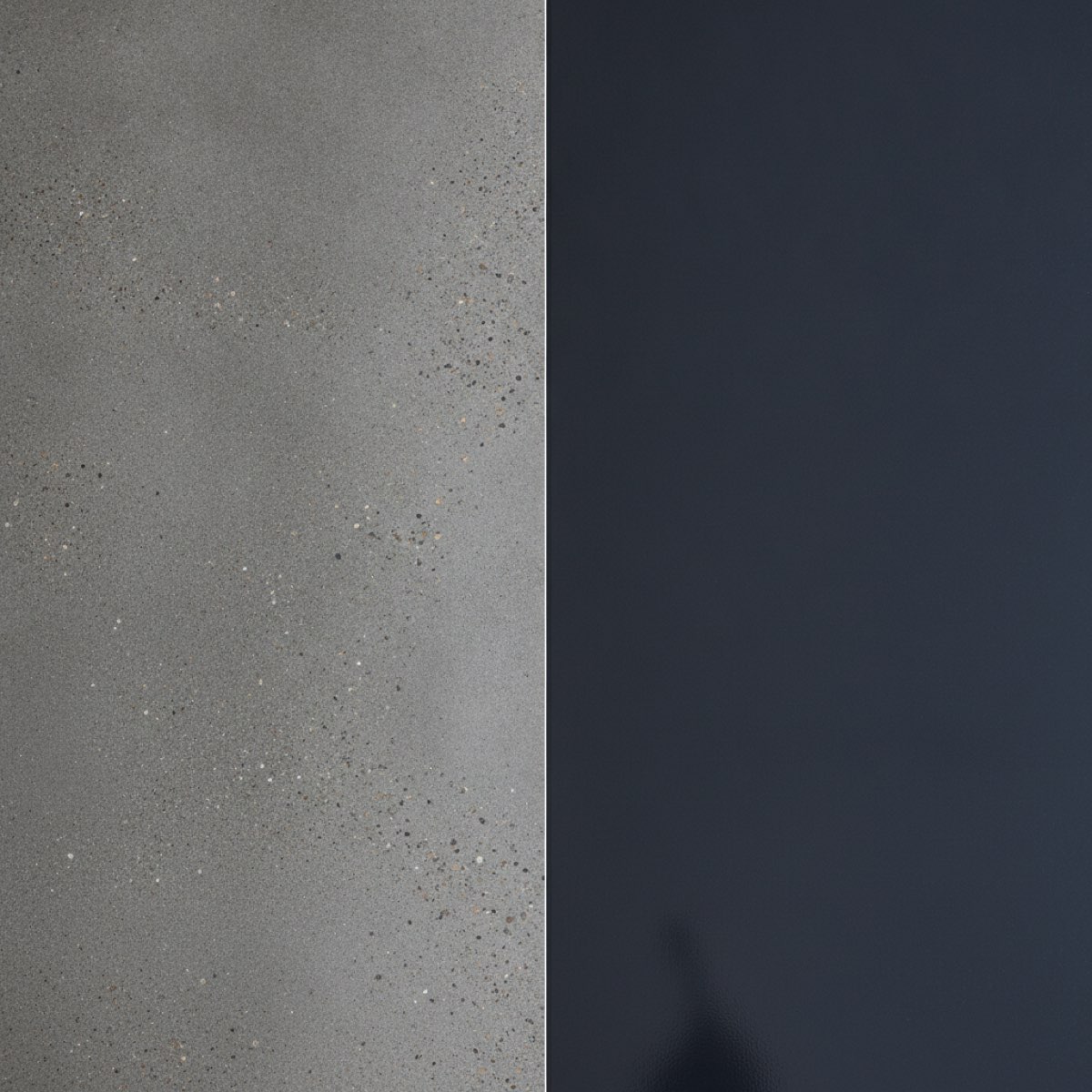
This is the cleanest way to choose between them. Polished concrete gives you the honest, grey, industrial look of finished concrete, with the aggregate showing through. It is a deliberate aesthetic and it is very much in fashion for open-plan interiors and large commercial spaces. Resin gives you a designed floor: a chosen colour, a chosen finish, and a flawless surface with no variation unless you want it. If you are fitting out a showroom and want a mirror finish in a specific colour, that is resin. If you want the slab to read as raw concrete, that is polish.
Chemical resistance and cleaning
Both are far easier to keep clean than bare concrete, but resin has the edge where spills are aggressive. A resin floor is non-porous and shrugs off oil, brake fluid, solvents and harsh cleaning chemicals, which is exactly why it dominates workshops and industrial floors. Polished concrete is sealed and copes well, but it remains more porous than resin, so a stubborn oil spill left to sit can mark it, and the seal needs maintaining over time.
The deciding question
Durability and the slab underneath
Both are tough, and both depend entirely on the slab beneath. Polished concrete is as durable as the concrete it is made from, and it cannot be better than that concrete. Resin bonds to the slab, so a moving, cracking or contaminated slab will telegraph through any floor on top. The difference is that with resin we can repair and stabilise the slab first and hide the evidence, whereas polishing puts every flaw on show. Either way, the preparation is what decides how long the floor lasts, not the headline product.
Not sure which suits your floor and your slab?
Tell us about the space and what is on the floor now. We will tell you straight which option makes sense and put it in a fixed-price written quote.
Cost and downtime
Neither has a single price, because both are driven by the size and condition of the slab, which is the same story we tell in our resin flooring cost guide. As a rule, a straightforward polish of a good slab and a straightforward solid-colour resin floor are broadly comparable, while decorative resin finishes such as metallic sit higher. Downtime is similar for both: a few days on site plus curing or sealing time before heavy use.
So which should you choose?
Lean towards polished concrete when:
- You have a sound, consistent slab worth showing off.
- You want a raw, grey, industrial or modern-interior look.
- You like the idea of the floor being the slab itself, breathable and low-build.
Lean towards a resin floor when:
- The slab is stained, patched or tired and you want it covered.
- You want a specific colour or a decorative finish.
- The floor will see oil, chemicals or heavy washing down.
About this guide
Who wrote this
This guide is written by the Obsidian Resin team. We prep and pour resin floors across Leicestershire and the East Midlands, and we grind plenty of slabs that were destined for polish before the owner saw the state of the concrete underneath. The comparison here is the honest one we give when someone asks which way to go.
Our honest position
We lay resin, not polished concrete, so we have a commercial interest and we are upfront about it. That said, polished concrete is genuinely the better answer for some floors, and we will tell you so. The aim here is to help you choose the right floor, whether that turns out to be us or not.
Frequently asked questions
- Is resin or polished concrete more hard-wearing?
- Both are very hard-wearing and both depend on the slab. Polished concrete is as tough as the concrete itself; resin adds a non-porous, chemical-resistant layer on top. For oily or chemical environments, resin has the edge.
- Can I have polished concrete if my slab is in poor condition?
- Not really to a good standard. Polishing shows every flaw, so a stained, patched or cracked slab will still look that way. A resin floor covers those problems, which is often why people switch.
- Which one comes in colours?
- Resin. It is available in any colour and a range of finishes from solid to flake to metallic. Polished concrete is limited to the concrete's own grey tones and a few dyes.
- Is polished concrete cheaper?
- It can be on a good slab, because nothing is added on top, but the comparison depends entirely on slab size and condition. A simple solid-colour resin floor is often in the same bracket.
- Can you put resin over polished concrete?
- Usually, if the polished surface is mechanically abraded first to give the resin a key. We assess it when we quote.